
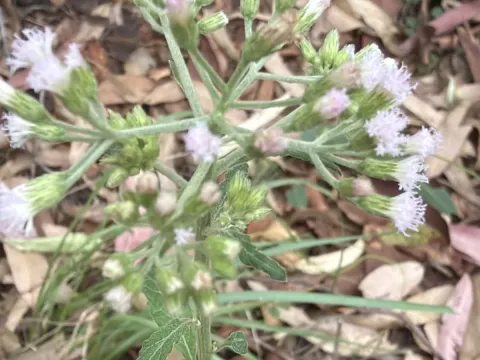
Cyanthillium
Cyanthillium
Successful cultivation of Cyanthillium begins with precise sowing practices. The seeds are small and require specific environmental triggers, typically a warm, stable soil temperature between 20°C and 25°C, to ensure optimal germination and early establishment.
What the section contains


Cyanthillium
Sowing should be shallow, ideally at a depth of 0.5 to 1 centimeter. Because the seeds require light to germinate, covering them with a thin layer of fine, well-draining soil or sand is essential for achieving a high percentage of emergence.
For nursery-based production, planting should be initiated 4–6 weeks prior to the projected field transplantation date. Maintaining consistent moisture in the growing medium during this period is critical to prevent the delicate seedlings from drying out before they develop a robust root system.
In field conditions, a systematic approach using rows spaced 30 to 40 centimeters apart is recommended. This spacing ensures adequate airflow and facilitates mechanical or manual weeding during the crucial initial growth phases of the crop.
Early maintenance is vital, as the seedlings are initially slow to compete with aggressive weed species. Careful inter-row cultivation during the first month following emergence is necessary to provide the plants with a competitive advantage for nutrients and sunlight.
Cyanthillium is a member of the Asteraceae family that thrives in open, high-light environments. To achieve maximum biomass and potential yield, it is best grown in locations receiving full sun exposure for the majority of the day, which helps maintain plant vigor.
The crop is adaptable but performs best in well-structured, loamy or sandy-loam soils that offer excellent drainage. The plants are sensitive to waterlogging, which can lead to root asphyxiation and significantly increase the risk of soil-borne pathogens.
Temperature is a key limiting factor for this species, as it is highly sensitive to frost. An optimal range for vegetative development is between 22°C and 30°C. Maintaining these conditions is necessary for consistent metabolic activity throughout the growing season.
Water management should be localized and consistent, ideally through a drip irrigation system. While the plant can tolerate short intervals of dry weather once established, consistent moisture during the flowering phase is essential for optimal development.
Soil fertility management should be based on periodic soil testing. Nitrogen application during the vegetative phase promotes leaf development, whereas phosphorus and potassium application during the transition to the flowering stage supports high-quality floral production.
The primary threats to Cyanthillium productivity include various fungal diseases that flourish in high-humidity conditions. Powdery mildew and leaf spot diseases are particularly problematic, often causing premature senescence of the foliage and reducing overall harvest quality.
Pest pressure is frequently driven by aphid infestations and spider mites, which can colonize the plant during warm, dry periods. These pests extract phloem sap, leading to stunted growth, leaf deformation, and potentially acting as vectors for systemic viral infections.
Implementing an Integrated Pest Management (IPM) strategy is highly recommended for this crop. This approach prioritizes early detection and the use of biological controls, such as beneficial insects or microbial pesticides, to manage populations without excessive chemical usage.
Preventative cultural practices are the most effective means of disease management. This includes strictly adhering to crop rotation schedules, avoiding previous hosts of Asteraceae pathogens, and ensuring adequate plant density to minimize stagnant air pockets.
In cases of severe infestation or infection, targeted application of appropriate fungicides or insecticides may be required. Application must be timed carefully to protect pollinators while effectively reducing the pest or disease burden on the crop.
The harvest phase is the most critical period for determining the final quality of the Cyanthillium yield. Collection should take place when the plant reaches its peak flowering stage, which coincides with the highest concentration of desired bioactive compounds.
Mechanical harvesting with modified cutters is efficient for large-scale production, provided the equipment is calibrated to minimize contamination with soil or debris. For premium quality, selective hand harvesting may be employed to ensure only the highest grade of plant material is collected.
Immediate post-harvest processing is mandatory to preserve material integrity. Harvested biomass must be transported quickly to a drying facility to prevent moisture buildup, which can cause internal heat generation and facilitate the growth of spoilage molds.
Drying is performed in controlled environments, typically utilizing forced-air systems kept at temperatures between 40°C and 45°C. Excessive heat must be avoided, as it can accelerate the degradation of essential oils and other thermolabile active ingredients.
Once dried to the required moisture content, the crop should be packaged in airtight, moisture-resistant containers and stored in cool, dark environments. These storage conditions are necessary to maintain the shelf life and chemical stability of the botanical product.