
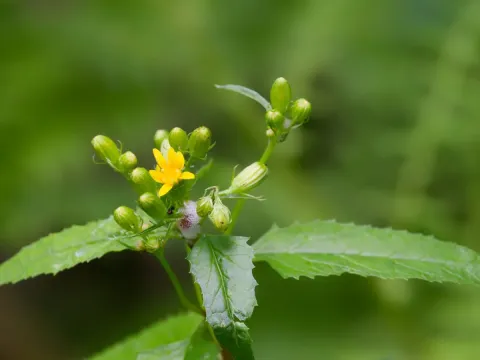
Arrowleaf groundsel
Senecio triangularis
Arrowleaf groundsel (Senecio triangularis) is a perennial member of the Asteraceae family, native to moist, high-elevation habitats in western North America. It is characterized by its adaptability to cool mountain environments and riparian zones.
What the section contains
Arrowleaf groundsel
The plant thrives in soil that remains consistently moist throughout the growing season. High organic matter content is essential for robust development, as the species relies on nutrient-rich substrates to support its rapid vertical growth.
Botanically, it features distinct triangular-shaped leaves that give the species its common name. The stems are sturdy and can reach heights of up to 1.5 meters, topped with clusters of bright yellow daisy-like flower heads.
Environmental requirements focus on cool ambient temperatures and partial shade. While it can withstand some direct sunlight if soil moisture is adequate, it generally performs best in habitats where it is protected from intense midday heat.
In landscaping and restoration, arrowleaf groundsel is valued for its erosion control capabilities due to its dense root system. It acts as a natural stabilizer for soils in disturbed mountain areas and contributes to biodiversity in wildflower meadows.
Fungal pathogens are the primary concern for this species, particularly rust fungi which thrive in humid conditions. Ensuring proper spacing between plants helps to reduce humidity and prevents the spread of spores between leaves.
Aphids are the most common insect pests, often colonizing the succulent tips of the stems and the developing flower buds. They reduce the plant's vigor by extracting sap, which can cause stunted growth if left unmanaged.
Slugs and snails can cause substantial damage to the young, emerging foliage during the spring. Implementing protective barriers or using organic-approved molluscicides can effectively mitigate this pressure on the crop.
Root rots become a significant threat if the soil structure becomes compacted or poorly drained, leading to anaerobic conditions. Maintaining appropriate soil aeration is crucial for the long-term health of the root system.
Integrated pest management strategies should emphasize regular monitoring and the removal of heavily infested plant tissues. Maintaining plant health through proper watering and site selection remains the best defense against major outbreaks.