
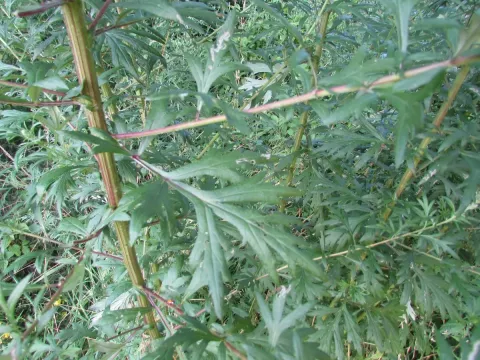
Artemisia carvifolia
Artemisia carvifolia
The sowing of Artemisia carvifolia should be performed in early spring once the soil temperature consistently reaches 10–12 degrees Celsius.
What the section contains
Artemisia carvifolia
Since the seeds are extremely small, they require shallow sowing, barely covered with a light layer of soil to ensure proper germination.
For industrial-scale cultivation, transplanting seedlings is recommended to ensure a uniform plant density across the entire field.
Direct field sowing requires precise seedbed preparation and a fine surface structure to prevent the seeds from washing away during irrigation.
Row spacing should ideally be maintained between 45 and 60 centimeters, providing adequate room for both plant development and mechanical weeding.
This member of the Asteraceae family thrives in open, sunny locations as sunlight is crucial for the synthesis of secondary metabolites.
The crop prefers well-drained, sandy loam or loamy soils with high aeration, avoiding sites prone to waterlogging or heavy clay accumulation.
While known for its relative drought tolerance, consistent moisture is necessary during the vegetative stage to maximize biomass production.
The plant performs best in neutral to slightly alkaline soils, which facilitate the uptake of essential nutrients and micronutrients.
Adequate soil structure and drainage are vital, as stagnant water is a significant factor in promoting root rot and general plant decline.
Yield outcomes for Artemisia carvifolia depend heavily on management practices, including proper fertilization schedules and irrigation control.
Productivity is generally measured not just by the weight of fresh biomass, but by the specific concentration of artemisinin per harvested unit.
Optimizing the harvest window is essential, as the levels of bioactive compounds fluctuate throughout the plant's life cycle.
Implementing a strict nutrient management program helps maintain a balance between foliage growth and the concentration of pharmacologically active compounds.
Strategic planting density is employed to maximize land use efficiency while ensuring each plant receives enough light to reach its metabolic potential.
The plant’s high content of essential oils provides a natural resistance to many common agricultural pests, reducing the need for chemical intervention.
Fungal diseases, particularly powdery mildew, can occasionally affect the foliage, especially in seasons characterized by high humidity and poor air circulation.
Root rot pathogens represent the primary threat in poorly drained fields, necessitating high-quality irrigation management and field selection.
Integrated pest management focuses on preventive measures, such as proper crop rotation and the maintenance of vigorous plant health through nutrition.
Regular monitoring of field conditions allows farmers to identify potential disease outbreaks early and take corrective actions immediately.
Harvesting is ideally performed at the onset of the flowering stage, the point at which the plant reaches its peak concentration of active chemical compounds.
Post-harvest handling requires rapid transportation to a drying facility to prevent oxidation and the degradation of essential oils.
Drying should be carried out in shaded, well-ventilated conditions at controlled temperatures not exceeding 40–45 degrees Celsius.
Care must be taken during the drying process to prevent excessive heat or humidity, both of which can compromise the quality of the final herbal product.
Once dried, the raw material is cleaned of debris, sorted for quality, and packed in light-protected containers for long-term storage.