
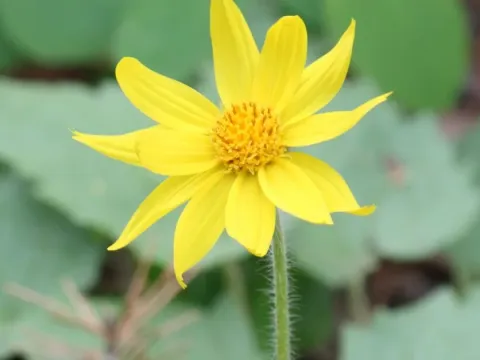
Arnica
Arnica
Arnica (Arnica montana) is a perennial flowering plant belonging to the Asteraceae family. In agricultural settings, it is primarily propagated through seeds, although vegetative propagation via rhizome division is also possible.
What the section contains


Arnica
The optimal time for sowing is spring, specifically in April or May, once the soil has warmed sufficiently. Autumn sowing in October is also a viable strategy, allowing for natural seed stratification over the winter, which leads to more uniform germination.
Seeds are shallowly sown at a depth of no more than 0.5 to 1 cm. Because they require light for germination, they should be barely covered with fine soil or sand. Keeping the seedbed consistently moist is crucial until the seedlings emerge.
For spring sowing, seeds must undergo cold stratification for 4 to 6 weeks at temperatures between +2°C and +5°C. This pre-treatment is essential to break dormancy and ensure a higher germination rate across the field.
Transplanting seedlings to the permanent production area is performed once the plants reach the 3-4 leaf stage. A spacing of approximately 30-40 cm between plants is recommended to minimize competition and facilitate mechanical weed control.
Arnica is a demanding crop that thrives in specific ecological niches similar to its native mountain meadows. It requires well-drained, acidic to neutral soils that are rich in organic matter but low in lime.
Sandy loam or loamy soils are ideal for this crop. Heavy clay soils that retain excessive moisture should be avoided, as waterlogging is the most common cause of root rot and plant failure in arnica farming.
The plant requires full sun exposure to thrive and produce high concentrations of active pharmaceutical compounds. Shaded areas lead to spindly growth and significantly lower levels of flavonoids and essential oils.
Climate-wise, arnica prefers cool to moderate temperatures and high air humidity. It is sensitive to extreme summer heat and drought, which often necessitates the implementation of drip irrigation systems in warmer growing regions.
Agrotechnical care includes regular weeding, particularly in the first two years of establishment. Since arnica seedlings grow slowly, they are easily outcompeted by weeds, requiring diligent manual or mechanical intervention.
The primary economic output of arnica cultivation is its floral heads, which are harvested for their therapeutic properties. These are rich in sesquiterpene lactones, essential oils, and various flavonoids.
Production cycles typically reach their peak yield in the third and fourth years. While some yield can be expected from the second year, the total biomass increases significantly as the root system matures over time.
An average hectare of a well-maintained arnica plantation can yield between 300 to 600 kilograms of dried flowers annually. Yield is heavily dependent on soil nutrition and the frequency of harvests during the flowering period.
Drying the harvested flowers is a critical process. It should be conducted at 40-50°C in well-ventilated drying facilities. Proper temperature control prevents the degradation of delicate active ingredients and maintains a high market value.
Because of the increasing demand for natural remedies, arnica is considered a high-value medicinal crop. Focusing on organic cultivation practices can often command premium prices in the pharmaceutical and cosmetic markets.
The primary threats to arnica production are fungal pathogens such as powdery mildew and various root rots, which thrive in poorly ventilated fields with high moisture levels. Disease management is mostly preventative.
Insect pests, specifically aphids and spider mites, are common nuisances that sap the vitality of the plant. Monitoring and early detection are vital to prevent large-scale infestation that can reduce flower quality.
Crop rotation is a key agrotechnical tool to reduce the pressure from soil-borne pathogens. Avoid planting arnica in fields that have recently hosted other members of the Asteraceae family to break disease cycles.
Integrated Pest Management (IPM) should be applied, emphasizing biological control agents over heavy chemical use. Maintaining plant health through proper fertilization and spacing helps the crop withstand minor pest attacks naturally.
Sanitation practices, such as the removal of dead plant material at the end of the season, are essential for reducing the inoculum load for the following year and preventing the overwintering of harmful pests.
Harvesting is a delicate, labor-intensive process that must be performed manually. Floral heads are picked when fully open, as this is the stage when active ingredient concentration is at its absolute maximum.
Flowers are cut with minimal stems, usually no longer than 1-2 cm. Precision is key; the rootstock must never be damaged during harvest, as the plant is a perennial intended for multiple years of production.
Harvested material is highly perishable. It must be transported in breathable containers, such as wicker baskets or perforated crates, to prevent self-heating, which can occur within a few hours of picking.
Once dried, the product should be stored in a cool, dark, and dry environment. Arnica is sensitive to humidity, so airtight packaging is recommended once the moisture content has reached the required level for storage.
Coordinating the harvest schedule with the plant's flowering cycles ensures that labor is used efficiently and that the quality of the raw material meets the strict standards required for medicinal-grade products.