
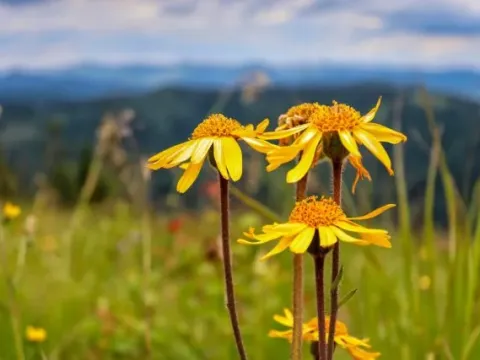
Arnica
Arnica mallatopus
The cultivation of Arnica montana begins with precise seed preparation, as the seeds require a period of stratification to break dormancy and ensure uniform germination across the field.
What the section contains
Arnica
Sowing is typically performed in late autumn or early spring. Seeds are surface-sown or covered with a very thin layer of substrate, as they are light-dependent and will not germinate if buried too deeply in the soil.
The seeds are slow to develop in their first year, forming a basal rosette. Therefore, maintaining a clean seedbed free of aggressive weeds is essential to prevent the seedlings from being overshadowed during their critical initial growth phase.
For large-scale agricultural production, the transplant method is often preferred. Seedlings are raised in controlled environments and transplanted to the field once they reach the 3-4 leaf stage to improve establishment success.
Proper spacing is vital, with rows typically set at 45 to 60 centimeters apart. This spacing facilitates mechanical weeding and ensures adequate airflow to reduce the risk of humidity-related fungal diseases.
Arnica montana is a member of the Asteraceae family and is strictly adapted to specific environmental conditions. It thrives in acidic soils, preferably with a pH ranging from 4.5 to 6.0, and shows poor growth in limed or alkaline soils.
The ideal substrate is a well-drained, sandy loam or humus-rich soil. It is crucial to ensure that the soil has excellent aeration, as the root system is highly susceptible to rot under waterlogged conditions.
While the plant is hardy and cold-tolerant, it requires consistent moisture throughout the growing season. However, stagnant water in the root zone must be avoided at all costs to ensure healthy development.
Arnica prefers locations with good light exposure but requires protection from extreme heat. In agricultural settings, north-facing slopes are often selected to simulate its natural habitat and prevent soil overheating.
Soil fertility management should rely on organic matter, such as high-quality compost, while avoiding synthetic fertilizers that can alter the delicate pH balance required for optimal growth.
The yield of Arnica montana is measured primarily by the weight of the dried flower heads. Under optimal management, farmers can expect a yield ranging from 50 to 100 kilograms of dried material per hectare.
Yield stability and plant productivity generally reach their maximum potential starting from the third year of cultivation. Careful management of plant density is essential for achieving these targeted figures.
The biological yield is highly influenced by seasonal weather patterns, particularly the availability of moisture during the bud initiation phase, which determines the total number of flower heads per plant.
Post-harvest processing is a critical component of the yield equation. Proper cleaning of the raw material to remove stem and leaf debris is required to meet high-quality pharmaceutical standards.
Effective drying techniques, keeping temperatures below 40 degrees Celsius, are vital to retain volatile oils and flavonoids, which are the primary constituents that define the market value of the crop.
Fungal pathogens such as powdery mildew represent the most significant threat to arnica plantations, particularly in areas with poor drainage or insufficient ventilation between rows.
Root rot, often caused by excessive irrigation or soil compaction, is a lethal issue that can quickly devastate an entire crop. Preventive measures include choosing light, well-aerated soil types.
Pests like aphids and certain larvae may target the flower buds and leaves. While these can often be managed through biological controls, monitoring the population density remains essential for crop security.
Nematodes are another persistent challenge in specialized medicinal herb farming. Crop rotation and maintaining soil health are the most effective strategies for long-term management of these soil-borne threats.
Integrated pest management, focusing on habitat health and early detection, allows for a significant reduction in the need for chemical interventions, aligning with the requirements for medicinal-grade production.
Harvesting Arnica montana is a labor-intensive process that must be carried out during full bloom. The flower heads are picked when they are fully open, ensuring maximum concentration of medicinal compounds.
The manual collection is preferred to ensure that only the flower heads are harvested, without including the stems or leaves. This selection process is necessary to achieve high-grade, market-ready raw material.
Multiple harvests are typically conducted throughout the season, depending on the intensity of the flowering cycle. This approach optimizes the yield while allowing the plants to remain healthy for future seasons.
Freshly picked flowers must be transported immediately for processing to prevent self-heating and oxidative degradation, which would otherwise lead to a dark color and poor quality of the final product.
After the harvest season, the field should be cleaned of plant debris to prevent the buildup of pathogens. Proper soil aeration and light fertilization in autumn help the plants recover for the next production year.