
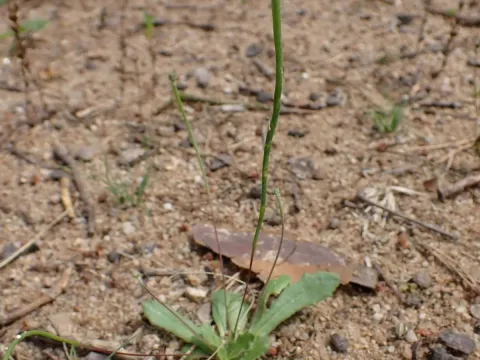
Arnoseris
Arnoseris
Arnoseris is a genus of annual herbaceous plants belonging to the Asteraceae family. In a contemporary agricultural context, it is typically categorized as a weed found in cereal crops rather than as a domesticated crop species.
What the section contains

Arnoseris
The germination of seeds occurs predominantly during the autumn or early spring seasons. The plant demonstrates high germination vigor when soil moisture is adequate, allowing it to establish itself rapidly in open spaces within arable fields.
Successful seed germination requires moderate temperatures and shallow placement within the topsoil layer. Seeds usually sprout best when buried no deeper than 1–2 centimeters, a characteristic typical of many small-seeded species within the daisy family.
Sowing times for the weed generally align with the natural shedding of seeds from the previous generation. In agricultural practice, management strategies should focus on eliminating seedlings before the onset of intense vegetative growth.
As Arnoseris is not a cultivated crop, intentional planting is never performed. The primary agronomic objective is to limit its propagation within the rotation through mechanical weeding or the application of herbicides.
The plant exhibits specific preferences for soil conditions. Arnoseris is most frequently observed on light, sandy, or loamy soils, which are typically characterized by acidic reactions and low organic matter content.
Arnoseris requires sufficient light for optimal vegetation, making it highly sensitive to shading by taller crops. In dense cereal stands, the growth of this weed is often suppressed due to a lack of solar radiation.
Climatic requirements involve a moderately humid spring and the absence of extreme drought during the early growth stages. The plant is well-adapted to the temperate climate of Europe, where it thrives in impoverished soil conditions.
Agronomic management must account for soil pH. Liming acidic soils is an effective method for reducing the competitiveness of Arnoseris, as the plant loses its biological advantage when the pH level moves toward neutrality.
The presence of this plant on a field often serves as an indicator of low soil fertility and acidity. Agronomists should monitor the weed flora composition and adjust fertilization programs to optimize crop performance.
Arnoseris is susceptible to various pathogens common to the Asteraceae family. Fungal diseases, such as powdery mildew, can affect the leaves during periods of high humidity and limited air circulation.
Pests that target this plant include various phytophagous insects, such as aphids and specific beetle larvae. However, due to its high reproductive capacity, the plant is usually capable of maintaining population stability despite pest pressure.
The primary threat in agriculture is the competition for essential nutrients and moisture. By drawing resources from the soil, Arnoseris can significantly reduce the overall yield of the main crop if left unmanaged.
Control methods include the use of systemic herbicides. The most effective application window is during the rosette stage, as the leaf surface area is sufficient for optimal herbicide absorption and translocation.
Integrated pest and weed management, including proper crop rotation and mechanical cultivation, are the most effective ways to mitigate the impact of Arnoseris. Diversifying the rotation helps prevent the long-term buildup of the seed bank.