
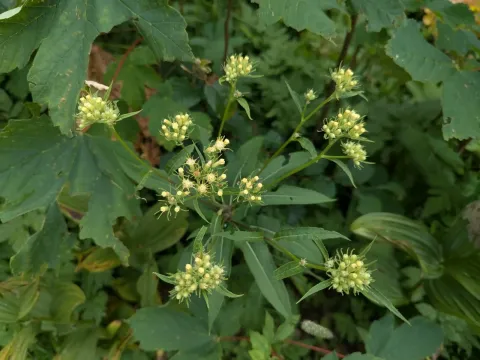
Broad-leaved ragwort
Senecio cacaliaster
Broad-leaved ragwort (Senecio cacaliaster) is a perennial herbaceous plant from the Asteraceae family. This species is native to the forest regions of Europe and is typically found in moist, shaded habitats where it thrives in natural woodland conditions.
What the section contains
Broad-leaved ragwort
The plant features a strong, upright stem and distinctively shaped leaves. Its biological structure is adapted to competitive environments, allowing it to grow efficiently in nutrient-rich forest soils with high organic content.
Cultivation requires specific environmental conditions, primarily focusing on soil moisture and light regulation. It performs best in partial shade, as exposure to intense direct sunlight can cause rapid dehydration and stress to the foliage.
Regarding soil requirements, the plant prefers well-drained but moisture-retentive loamy soils. A slightly acidic to neutral pH level is ideal for nutrient uptake, which supports the robust vegetative growth observed during the spring and summer months.
While primarily of botanical and ecological interest, the plant has potential applications in landscape design, especially for shaded garden borders. Its growth habit provides structural integrity to herbaceous plant communities.
The primary pathological threats include fungal infections such as powdery mildew. This typically occurs in poorly ventilated areas where humidity remains excessively high, requiring active management of plant spacing.
Pest populations, including aphids and leaf-eating beetles, present the most significant threat to plant health. Regular inspections are necessary to identify infestation clusters before they cause widespread leaf damage.
Agricultural management should prioritize cultural controls, such as maintaining optimal plant density and ensuring proper soil drainage. This strategy reduces the environmental stress that often predisposes the plant to secondary infections.
In cases of severe infestation, targeted biological control methods are preferred over broad-spectrum chemical pesticides to preserve the surrounding soil ecosystem. Selective pruning of affected foliage helps in managing the spread of localized pathogens.
Maintaining a healthy nutrient balance, avoiding over-fertilization, and ensuring proper irrigation schedules are essential for plant resilience. These practices build strong immunity against common pests and environmental stressors throughout the growing season.