
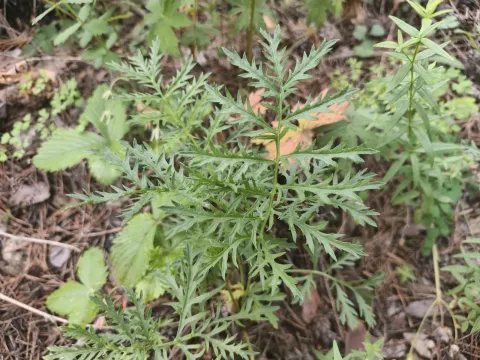
Broadleaf mugwort
Artemisia latifolia
Broadleaf mugwort (Artemisia latifolia) is a perennial herb belonging to the Asteraceae family. It is native to the steppe and forest-steppe regions of Eurasia, where it thrives in open, sun-exposed habitats.
What the section contains
Broadleaf mugwort
Botanically, the plant is distinguished by its broader leaves compared to other common wormwood species. It grows to heights of 1 meter or more, possessing a strong root system that aids in environmental adaptability.
The crop thrives in well-drained, moderately fertile soils. It is notably drought-tolerant once established, though consistent moisture during the early vegetative phase promotes better yield and leaf mass.
Climate requirements include exposure to ample sunlight and protection from extreme waterlogging. Due to its evolutionary origins, the plant is highly hardy and capable of surviving cold winter temperatures.
In terms of agricultural use, the plant is primarily cultivated for its secondary metabolites, including essential oils used in pharmaceutical and cosmetic industries, as well as its historical applications in traditional herbal medicine.
The primary threats to Broadleaf mugwort cultivation include fungal diseases like powdery mildew, which thrive when planting density is too high and air circulation is restricted.
Insect pests such as aphids and specialized coleoptera can damage the foliage. Monitoring programs are essential to ensure that infestation levels do not compromise the economic value of the harvest.
Integrated pest management strategies, including the rotation of crops and the removal of plant debris, are recommended to minimize the impact of common agricultural pathogens.
Maintaining proper spacing during sowing is a critical cultural practice that allows the plants to dry quickly after rain, thereby reducing the risk of fungal infections.
Early detection remains the most effective management tool, requiring regular field scouting to identify potential outbreaks before they spread across the entire plot.