
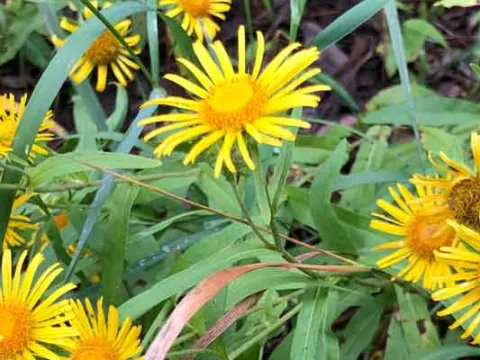
British elecampane
Inula britannica
Sowing of Inula britannica is typically performed in early spring or late autumn depending on regional climate conditions. High-quality seeds with high germination potential are crucial for establishing a healthy stand from the very first season.
What the section contains
British elecampane
Seeds should be sown in rows spaced approximately 45 to 60 centimeters apart to allow for proper plant spacing and subsequent mechanical weeding. The depth of sowing must be shallow, ideally between 1 and 2 centimeters, to prevent poor emergence.
If seeds are sown in autumn, they undergo a natural stratification process during winter, which often results in more vigorous and uniform growth upon the arrival of spring. This method is preferred in regions with a distinct cold season.
In the first year, the crop focuses on establishing its root system and forming a basal rosette. Therefore, initial soil preparation and weed suppression are vital to ensure the crop is not overtaken by competing vegetation during this slow growth phase.
Propagation via division of rhizomes from mature 3–4-year-old plants is another viable method for smaller operations. This technique ensures genetic consistency and provides a faster path to harvesting than starting from seeds.
British elecampane is a member of the Asteraceae family, thriving in environments with ample moisture and sunlight. It naturally inhabits damp meadows and riverbanks, which indicates its high water requirements during the growing season.
The ideal soil for this crop is a nutrient-rich, fertile loam or sandy loam with a neutral to slightly acidic pH. Poorly drained soils or soils prone to long-term waterlogging should be avoided to prevent root diseases.
Climate-wise, the plant is quite hardy and adapts well to temperate zones. It requires sufficient sunlight for optimal photosynthesis and the development of bioactive compounds, although it can tolerate light shade.
Regular irrigation is essential during periods of low rainfall, particularly during the stem elongation phase. Adequate moisture is the key factor in achieving high biomass yields and ensuring the plant remains healthy throughout its development.
Fertilization with balanced NPK inputs can significantly boost growth, especially in soils that are not inherently rich in minerals. Soil testing is recommended before planting to adjust nutrient levels and pH if necessary.
Inula britannica is susceptible to fungal diseases such as powdery mildew, which manifests as a white coating on the leaves. Proper ventilation between rows and controlling humidity are the best ways to mitigate this risk.
Root rot can become a severe problem in poorly drained fields or during excessively wet growing seasons. To prevent this, fields must be designed with adequate drainage systems to avoid standing water around the root zone.
Pests like aphids are common threats that can cluster on the undersides of leaves and on young flower buds. Integrated pest management, including the use of beneficial insects, can help maintain population levels below economic damage thresholds.
Weed management is critical in the early stages of cultivation, as young plants are vulnerable to competition. Mechanical cultivation between rows is often the preferred method to avoid chemical usage where possible.
Field hygiene, including the removal of crop residues after the final harvest, helps break the disease cycle and prevents the accumulation of overwintering pathogens or pests in the soil.
Harvesting British elecampane requires precision to ensure the quality of the pharmaceutical raw material. The flowers are typically gathered during full bloom when they contain the highest concentration of essential oils and other compounds.
Herbal raw material (the aerial parts) is harvested using mechanical mowers set to a height that preserves the basal parts of the plant. This promotes secondary growth and improves the longevity of the perennial stand.
Rhizomes should be harvested in the autumn, once the plant has entered dormancy. This timing ensures that the concentration of secondary metabolites has migrated from the leaves to the roots, maximizing medicinal potency.
Post-harvest cleaning involves removing soil and impurities to meet market quality standards. After thorough washing, the material must be dried promptly in controlled environments to prevent fermentation or fungal growth.
Proper storage is the final step, requiring cool, dry, and dark conditions to maintain the stability of the active constituents. Using breathable packaging materials helps ensure the longevity of the final product.