
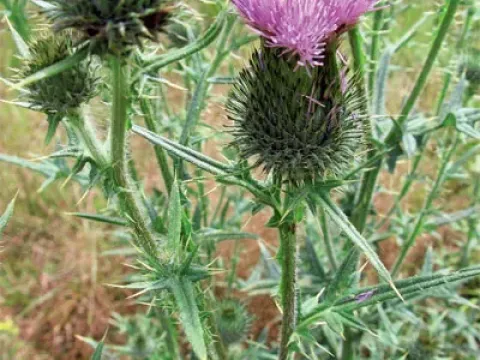
Bristly thistle
Carduus carduelis
The Bristly thistle (Carduus carduelis) is a biennial plant belonging to the Asteraceae family, valued for its biological properties and potential in agriculture.
What the section contains
Bristly thistle
Seeding is typically performed in late autumn or early spring, ensuring the soil is sufficiently prepared and free from deep-rooted perennial weeds.
Seeds should be sown at a shallow depth of approximately 2 cm to provide the necessary moisture for germination while allowing light penetration for healthy emergence.
Row spacing is maintained at 50–60 cm to ensure sufficient space for the plant's large rosette formation during its first year of development.
Optimal germination occurs when temperatures stabilize between 10 and 15 degrees Celsius, making spring sowing ideal for most temperate regions.
This crop is highly adaptable to various soil types, although it performs best in well-drained loamy soils with a neutral pH level.
Bristly thistle requires full sun exposure and does not perform well in shaded areas, which can lead to stunted growth and reduced seed production.
The plant is known for its high drought tolerance due to its deep taproot, allowing it to survive in areas with irregular precipitation patterns.
Proper aeration is essential for the root system, which is achieved through regular inter-row cultivation during the early stages of plant growth.
It thrives in moderate climates and is relatively hardy against early spring frosts, which allows for early establishment in the agricultural calendar.
The economic value of the crop is derived from its medicinal biomass, specifically the flowers and leaves, which are harvested for pharmaceutical use.
As a notable honey plant, Bristly thistle provides high-quality nectar, significantly boosting the yield of apiaries located near large plantings.
Seed yield depends on the overall health of the crop, with proper fertilization promoting more robust flower heads and better seed development.
Advanced agricultural practices, such as the use of organic fertilizers, can increase the total green mass produced per hectare by up to 20 percent.
Systematic harvesting ensures a continuous supply of material, making it a viable component for diversified agricultural operations.
Fungal diseases like rust and powdery mildew are the most common threats, particularly in humid or overcrowded field conditions.
Pests such as aphids and flower-head weevils can damage the reproductive parts of the plant, directly impacting the final seed harvest quality.
Integrated pest management, focusing on biological control agents, is recommended to keep the harvest safe for subsequent medical processing.
Competition from weeds during the seedling stage is critical and must be controlled manually or mechanically to prevent stunted plant development.
Waterlogging is a major risk factor, leading to root rot and severe losses in plant density during the winter dormancy period.
The harvesting of aerial parts is carried out during the initial flowering phase to ensure the maximum concentration of beneficial bioactive compounds.
Drying must be conducted in well-ventilated, shaded environments to preserve the active ingredients and prevent the loss of essential plant oils.
Seed harvesting should be performed when the heads turn brownish but before they fully shatter and disperse their seeds via wind.
Modern harvesting equipment can be calibrated to separate the light, fluffy seeds from plant debris, ensuring a clean and high-quality final product.
Post-harvest residues can be mulched and incorporated back into the soil, acting as a natural organic amendment for the next planting season.