
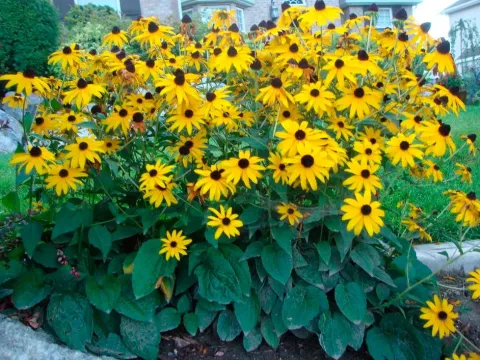
Shining coneflower
Rudbeckia nitida
Shining coneflower (Rudbeckia nitida) is a robust perennial member of the Asteraceae family, well-regarded for its significant height and radiant yellow flowers.
What the section contains
Shining coneflower
Propagation is typically achieved through division in early spring or autumn, as well as via seed sowing, which requires a period of cold stratification for optimal results.
For indoor sowing, seeds should be started in trays filled with a sterile, well-draining potting mix, placing them in a bright location with a constant temperature.
Transplanting seedlings to their final outdoor position occurs once the danger of frost has passed and the soil has reached a sufficient temperature for root establishment.
The planting site should be carefully prepared by incorporating organic matter to improve soil structure and water-holding capacity, which supports vigorous growth.
This species thrives in full sun exposure; while it can tolerate partial shade, insufficient light often results in elongated, weak stems that require mechanical support.
The ideal soil profile for Rudbeckia nitida is fertile, moisture-retentive, and slightly acidic, mimicking its native habitat conditions in North American grasslands.
Adequate hydration is critical during the peak summer months, as moisture stress can significantly reduce flower size and cause premature foliage browning.
Fertilization should be balanced, focusing on promoting root health during the first year and then supporting flower production in subsequent growing seasons.
Mulching is a highly recommended practice to stabilize soil temperature and suppress weed competition, ensuring the plants remain healthy and vibrant throughout the season.
Powdery mildew is the most prevalent disease, especially in dense planting arrangements with poor air circulation during hot and humid weather conditions.
Leaf spot diseases, caused by various fungal pathogens, can cause localized necrosis on foliage, often leading to aesthetic decline if not addressed promptly.
Insect pests such as aphids and leaf miners may colonize the plants, requiring targeted monitoring and application of appropriate horticultural soaps or systemic insecticides.
To maintain plant health, it is essential to monitor for early signs of infestation and remove any debris or infected parts to prevent further disease progression.
- Maintain adequate spacing between plants for airflow.
- Apply fungicides at the first sign of fungal infection.
- Avoid overhead irrigation to reduce leaf wetness.