
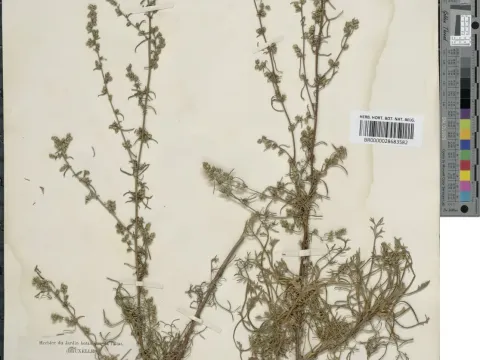
Short-leaf wormwood
Artemisia brachyphylla
Artemisia brachyphylla, commonly known as short-leaf wormwood, is a perennial plant species belonging to the Asteraceae family. It is recognized for its specialized adaptation to harsh environments, making it a subject of interest in xerophytic agriculture.
What the section contains
Short-leaf wormwood
The plant originates from arid regions where water scarcity is the primary limiting factor for plant growth. Its botanical architecture is optimized for survival, featuring reduced leaf surface area that significantly decreases transpiration rates during peak temperatures.
Regarding soil requirements, this species thrives in well-drained, sandy, or rocky soils. It is highly sensitive to waterlogging, as excessive soil moisture promotes root pathogens, which can rapidly diminish the health and productivity of the stand.
Climate demands are relatively low due to the plant's natural resilience. It requires full solar exposure throughout the growing season to synthesize the essential oils and secondary metabolites that define its pharmacological and agricultural value.
Agrotechnical practices include maintaining appropriate plant spacing to prevent moisture accumulation and promote airflow. During the establishment phase, shallow cultivation is recommended to mitigate weed pressure without damaging the sensitive root structure.
The primary economic use of Artemisia brachyphylla is in the pharmaceutical and cosmetic industries. Its tissues are rich in specific terpenoids and flavonoids that possess documented antimicrobial and antioxidant properties.
Harvesting is typically timed to coincide with the peak flowering period, as the concentration of active chemical compounds in the plant is highest at this stage. Automated harvesting equipment is often utilized in large-scale commercial operations.
Post-harvest management is crucial for product quality. The material must be dried in controlled conditions, away from direct sunlight, to prevent the volatile organic compounds from evaporating and losing their therapeutic efficacy.
Quality control during drying involves monitoring moisture levels, which should reach equilibrium to ensure long-term shelf stability during storage and transportation to processing facilities for extraction.
In addition to medicinal uses, the plant is valued for its soil stabilization properties. Its extensive, robust root system helps secure soil integrity in degraded landscapes, making it an excellent candidate for ecological restoration projects in arid areas.