
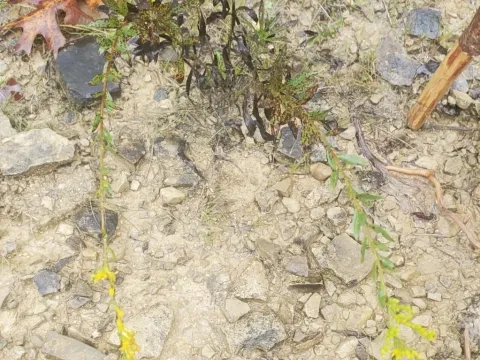
Short's Goldenrod
Solidago shortii
Short's Goldenrod (Solidago shortii) is a perennial herb belonging to the Asteraceae family, recognized for its restricted native range in North America.
What the section contains
Short's Goldenrod
Seeds require a period of cold stratification to break dormancy; therefore, sowing in late autumn or early spring is critical for successful germination.
For greenhouse production, seeds are sown in plug trays using a sterile, well-draining substrate to prevent dampening-off and other seedling diseases.
Vegetative propagation via root division is a preferred method for commercial nurseries, performed during the dormant season to ensure rapid establishment.
Careful spacing is required to ensure adequate airflow, which is essential for reducing the humidity levels around the foliage of this species.
This species thrives in full sun but can tolerate light shade, provided the soil remains consistently moist yet well-drained throughout the growing season.
Naturally adapted to limestone cliff habitats, it prefers alkaline to neutral soil conditions, which should be incorporated into site selection strategies.
Soil fertility should be managed through the application of balanced, slow-release fertilizers at the onset of the spring growth phase.
Watering requirements are moderate; however, supplemental irrigation is necessary during prolonged summer dry spells to prevent premature flowering decline.
Mulching is highly recommended to regulate soil temperature and minimize weed competition, which is crucial for young, newly established stands.
Powdery mildew represents the most significant pathological threat, particularly in locations with poor air circulation or high nocturnal humidity.
Leaf rust can occur if the foliage remains wet for extended periods, necessitating the use of disease-resistant cultivars or cultural preventative measures.
Aphids and various lepidopteran larvae may feed on the tender young growth, leading to reduced vigor and diminished aesthetic value of the plant.
Integrated Pest Management (IPM) practices should be employed, prioritizing manual removal or biological controls before resorting to chemical interventions.
Regular monitoring of the foliage and stems for symptoms of viral or fungal distress is essential for maintaining a healthy and productive perennial stand.
Short's Goldenrod is primarily cultivated for its late-season floral display, making it a valuable asset in late-summer and autumn border designs.
Cut flowers should be harvested when the individual ray florets begin to open, ensuring the stems remain vibrant for as long as possible after cutting.
Maintenance pruning of spent flowers is standard practice to improve the plant's appearance and prevent unwanted self-seeding in garden environments.
The entire above-ground biomass should be cut back to the base after the first killing frost, allowing the root system to overwinter successfully.
Seed harvesting, if intended, requires bagging the flower heads before the seeds mature and disperse, followed by cleaning and storage in cool, dry conditions.