
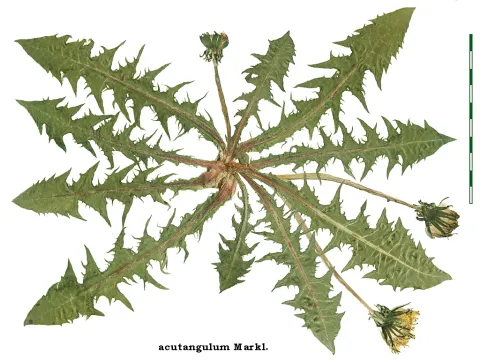
Sharp-angled dandelion
Taraxacum acutangulum
The sharp-angled dandelion (Taraxacum acutangulum) is a perennial herbaceous plant belonging to the Asteraceae family. It is recognized for its unique botanical profile and its potential as a specialized crop in temperate agricultural zones.
What the section contains
Sharp-angled dandelion
The species prefers well-drained, nutrient-rich soils with a neutral pH. Its deep taproot system allows the plant to access subsoil moisture, making it relatively drought-tolerant once fully established in the field.
In terms of climatic requirements, the plant thrives in moderate sunlight and is well-adapted to varied seasonal temperatures. Optimal growth is observed in regions where spring and summer offer sufficient day length for vegetative development.
Standard agronomic practices for this crop involve maintaining clean inter-row spaces to ensure minimal competition from weeds. Proper soil preparation and moderate fertilization contribute to higher yields of quality botanical material.
Economically, the crop is utilized primarily for its bioactive compounds found in both roots and leaves. It is increasingly being integrated into sustainable farming systems aimed at local medicinal and food production markets.
The primary pathological threats to Taraxacum acutangulum include powdery mildew and rust fungi, which typically appear during periods of high humidity or poor field ventilation.
Soil-borne pests, such as wireworms, can cause significant damage to the root system, potentially weakening the plant and reducing the total harvest weight of the medicinal roots.
Aphids are the most common foliar pests. Their activity can lead to curled leaves and stunted growth, negatively affecting the plant's ability to accumulate secondary metabolites.
Management strategies involve regular scouting and, where necessary, the application of organic-certified pesticides or biological control agents to preserve the purity of the harvested material.
Crop rotation remains the most effective prophylactic measure to break the life cycle of soil-dwelling pests and prevent the accumulation of pathogens in the cultivation area.