
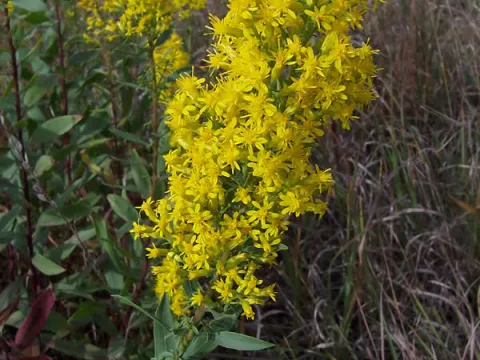
Showy goldenrod
Solidago speciosa
Showy goldenrod (Solidago speciosa) is a perennial herbaceous plant in the Asteraceae family. Known for its upright form and bright yellow inflorescences, it is widely utilized in both ornamental gardening and as an excellent pollinator plant.
What the section contains
Showy goldenrod
Sowing is typically performed in early spring or late autumn. If sown in spring, seeds require a period of cold stratification for 30–60 days to break dormancy and ensure high germination rates, mimicking natural environmental conditions.
Seeds should be surface-sown or covered with a very thin layer of soil because they require light for optimal germination. Consistent moisture must be maintained during the first few weeks after sowing to support the development of seedling root systems.
Transplanting can also be used as a method of establishing the crop. For larger commercial plots, vegetative division of established clumps in the dormant season is a more predictable method than starting from seed.
Once established, the plant exhibits strong growth and vigor, successfully competing with common weeds. Proper spacing of 40–60 cm between rows is recommended to ensure adequate air circulation and to facilitate easy maintenance of the plot.
Native to North America, the showy goldenrod thrives in open prairies and light woodland borders. It is highly drought-tolerant once established, thanks to its deep, sturdy taproot system, which helps it access water in drier soil profiles.
The plant requires full sun exposure to reach its maximum aesthetic and physiological potential. In shaded environments, the stems become weak and leggy, often requiring support to prevent them from falling over, and floral production drops significantly.
It performs best in well-drained, fertile soil types, including sandy loams and clay loams with a neutral to slightly acidic pH. The crop does not tolerate "wet feet" or prolonged soil saturation, which can lead to root degradation.
Maintenance involves routine weeding, particularly in the first year of growth. Once the root system is fully mature, the plant requires minimal intervention, apart from occasional cleaning of dead biomass to maintain a tidy appearance.
Though adapted to varying conditions, the crop responds positively to light applications of balanced fertilizers. Phosphorus and potassium are particularly important for promoting robust flowering and winter hardiness in late-season growth.
The primary economic value of showy goldenrod lies in its role as a high-quality nectar source for bees and other pollinators. It is particularly valued by beekeepers for its late-season bloom, providing essential forage when other plants have ceased flowering.
Nectar yield is maximized when plants are provided with adequate spacing and sunlight, allowing each plant to reach its full size. A healthy stand of Solidago speciosa can significantly improve the biodiversity and honey production of nearby apiaries.
In terms of biomass production, it is often utilized for cut flowers. The stalks are harvested when approximately 50% of the tiny florets within the panicle have opened, ensuring long vase life and vibrant color retention.
The plant is increasingly used in restoration ecology for soil stabilization and habitat restoration. Its perennial nature provides long-term coverage and helps prevent soil erosion on sloped sites where other vegetation might struggle.
Total yield per hectare is influenced by soil quality and irrigation management. Although it is a drought-tolerant species, providing supplemental water during the peak vegetative stage will result in larger, more productive floral displays.
Powdery mildew is the most common fungal disease, typically occurring during periods of high humidity and poor air circulation. It appears as a white dusting on the foliage and can reduce the plant's overall vigor.
Pests such as aphids and leaf-eating beetles can occasionally cause damage to the tender parts of the plant. Integrated pest management, such as encouraging beneficial predatory insects, is often sufficient to control minor infestations.
Root rot, caused by Phytophthora or other water-borne pathogens, is a significant threat in poorly drained soils. The best defense is ensuring high drainage capability of the planting site and avoiding excess irrigation during cool, damp weather.
Rust can also affect the foliage, resulting in small reddish-brown pustules. Management involves pruning away heavily infected leaves and ensuring that old debris is cleared from the base of the plant during late autumn or early spring.
Regular monitoring of the stand is essential for healthy crop management. By spotting the early stages of disease or pest activity, growers can implement cultural controls, thereby minimizing the need for heavy chemical intervention.