
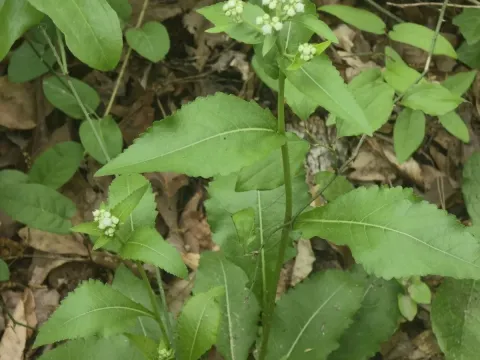
American feverfew
Parthenium integrifolium
American feverfew (Parthenium integrifolium) is a perennial herbaceous plant belonging to the Asteraceae family. For successful cultivation, seeds should be sown in early spring once soil temperatures reach 10–12°C, or alternatively, fall seeding can be employed in well-prepared beds.
What the section contains
American feverfew
Prior cold stratification of seeds is highly recommended, as it significantly enhances germination rates under field conditions. Planting is typically done in rows with spacing of approximately 45–60 centimeters, ensuring adequate space for robust bush development.
Seed depth should be limited to 1–2 centimeters, as the small seeds require firm contact with moist soil to activate growth. During a dry spring, supplemental irrigation or misting is essential to maintain consistent moisture in the topsoil layer.
Initial germination is slow, requiring careful weed management during the early stages of vegetation. In its first year, the plant primarily focuses on establishing a strong root system and a basal rosette of leaves, with limited development of flowering stems.
The use of row covers or plastic tunnels can significantly accelerate growth in cooler climates. Proper timing ensures the plants are well-established and hardened before the onset of harsh summer heat or early autumn frosts.
The crop thrives in well-drained, fertile loam soils with a neutral to slightly acidic pH. Waterlogging is detrimental to Parthenium integrifolium, as the root system is sensitive to oxygen deprivation and prone to root rot in poorly aerated environments.
While the plant demonstrates high drought tolerance once its root system has penetrated deep into the soil profile, supplemental irrigation during peak growth phases is recommended for commercial biomass production.
Solar exposure is critical, as American feverfew is an obligate sun-loving species. Shaded conditions lead to reduced accumulation of secondary metabolites and lower overall plant productivity; therefore, fields must be situated in fully open areas.
Nutrient requirements are moderate, with spring applications of phosphorus and potassium fertilizer stimulating flower stalk development. Excessive nitrogen should be avoided, as it can cause lodging and decrease the plant's natural cold hardiness.
In terms of climate, the species is adapted to temperate latitudes and is highly winter-hardy, provided there is adequate snow cover. In regions with severe winters and no snow, mulching the root zone is recommended to protect the crown from frost heaving.
Harvesting the aerial parts for medicinal or botanical use should occur during peak flowering, when the concentration of active compounds is at its highest. At this stage, the stems are at their structural and chemical prime.
The harvest is conducted mechanically using forage harvesters set to a cutting height of 10–15 centimeters above the soil surface. This height facilitates rapid regeneration of the plant, allowing for potential secondary cuts during the same season.
Freshly harvested biomass must be transported immediately to drying facilities to prevent spontaneous heating and the subsequent degradation of valuable phytochemicals. Rapid moisture removal is the key to maintaining raw material quality.
When harvesting for seed production, growers must perform selective collection once the flower heads show signs of browning. Since the seeds are prone to shattering, prompt collection before adverse weather is necessary.
Post-harvest processing involves screening to remove debris and final drying in a well-ventilated area. Properly processed and dried material can be stored for extended periods without significant loss of biological efficacy.