
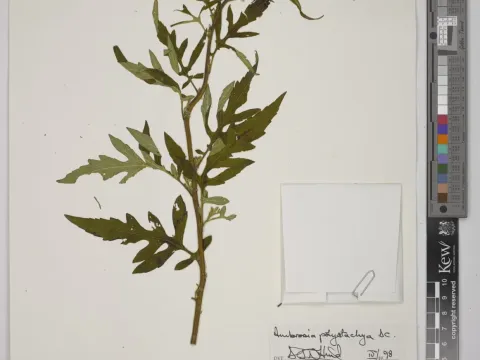
Ambrosia polystachya
Ambrosia polystachya
Ambrosia polystachya is a perennial herbaceous plant belonging to the Asteraceae family. In modern agronomy, this species is recognized not as a crop, but as an aggressive invasive weed that threatens local biodiversity and farming productivity.
What the section contains
Ambrosia polystachya
Originating from South America, the plant has successfully migrated to various global regions. It thrives in open agricultural landscapes, exhibiting a high capacity to colonize disturbed soils, roadsides, and neglected agricultural fields.
The plant features a robust branching stem and deep-reaching root systems, which allow it to absorb nutrients and water more efficiently than many cultivated crops. This competitive advantage makes it difficult to eradicate once established.
Environmental requirements for growth include high levels of solar radiation and moderate soil moisture. While it prefers fertile loamy soils, it is highly resilient and can withstand challenging edaphic conditions, including soil compaction.
Management practices require a strictly integrated approach. This includes mechanical cultivation, such as deep tilling to disrupt the root architecture, and the use of targeted systemic herbicides to prevent the plant from establishing a long-term seed bank.
The plant causes severe economic losses by competing with main crops for vital growth resources. Its rapid growth cycle allows it to overgrow fields, significantly reducing the yield of primary food and feed crops during the harvest period.
Common biological threats to this plant include various fungal pathogens such as rusts and powdery mildew. While these natural stressors affect its vitality, they rarely provide sufficient control for commercial agricultural purposes.