
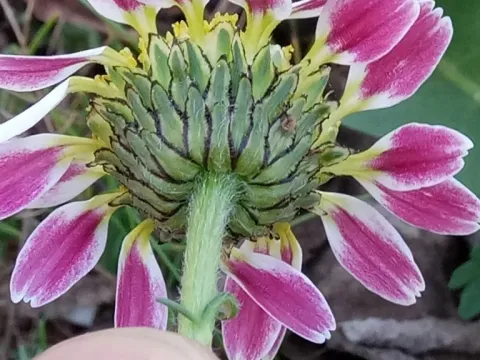
Anacyclus
Anacyclus
The sowing of Anacyclus is primarily conducted during the spring season once the soil has warmed to a consistent temperature of 12–15 degrees Celsius.
What the section contains
Anacyclus
Preparation of the seedbed is critical; the soil must be fine-tilled and leveled to ensure uniform seed distribution and proper depth control during planting.
Seeds are sown in rows spaced approximately 30 to 45 centimeters apart to allow for proper airflow and space for the plants to develop their basal leaf rosettes.
Given the small size of the seeds, they should be covered with a very thin layer of soil, no more than 1 centimeter deep, to ensure optimal germination rates.
Maintaining consistent moisture in the topsoil during the germination phase is essential to achieve a uniform and vigorous plant stand across the field.
Anacyclus is a member of the Asteraceae family and is highly photophilous, requiring full sun exposure to thrive and produce high-quality medicinal compounds.
The crop is best suited for sandy, loamy, or stony soils that offer excellent drainage, as standing water can lead to rapid root rot and crop failure.
The plant demonstrates good tolerance to moderate drought conditions, which is beneficial when cultivated in semi-arid regions or on nutrient-poor soil types.
Soil pH levels should ideally range from neutral to slightly alkaline; highly acidic soils should be treated with lime prior to planting for better results.
While the plant is hardy, it requires protection from harsh wind and extreme stagnant humidity, which can affect its overall metabolic processes during growth.
The economic value of Anacyclus is concentrated in its roots, which are harvested for their therapeutic compounds, including various pyrethrin-like alkaloids.
In a managed agricultural setting, the yield of dried roots typically reaches 5 to 10 centners per hectare depending on soil fertility and climate management.
To ensure maximum active ingredient content, the roots should ideally be harvested from plants that have completed their second year of vegetative growth.
Efficient extraction and drying processes are necessary to preserve the quality of the raw material, as moisture content must be strictly controlled.
Beyond its pharmacological use, the species is often valued in decorative gardening for its ability to form dense, attractive mats of fern-like foliage.
The most significant pathological threat to Anacyclus is fungal root rot, which typically occurs when irrigation management is poor or drainage is inadequate.
Soil-borne pests like wireworms and chafer larvae can severely damage the root system, leading to stunted growth or the eventual death of the affected plants.
Aphids and spider mites may occasionally infest the foliage, particularly during warm and dry periods, necessitating regular monitoring of the crop canopy.
Crop rotation practices should be strictly observed, avoiding planting Anacyclus in the same field for at least four years to mitigate soil pathogen buildup.
Integrated pest management strategies, including the use of bio-insecticides and mechanical weeding, help maintain plant health without chemical reliance.
Harvesting usually takes place in the autumn of the second year, when the foliage begins to wither, signaling that the plant is storing energy in the roots.
Mechanical harvesting equipment, such as root lifters or plows, is used to extract the roots from the soil with minimal physical damage to the plant tissue.
Immediate post-harvest processing is mandatory; roots are washed, cleaned of debris, and transported to drying facilities to prevent fungal colonization.
Drying must occur at controlled temperatures, not exceeding 45 degrees Celsius, to ensure the preservation of heat-sensitive chemical constituents.
Final storage of the dried product requires a cool, dry environment with proper ventilation to maintain the shelf life and potency of the collected material.