
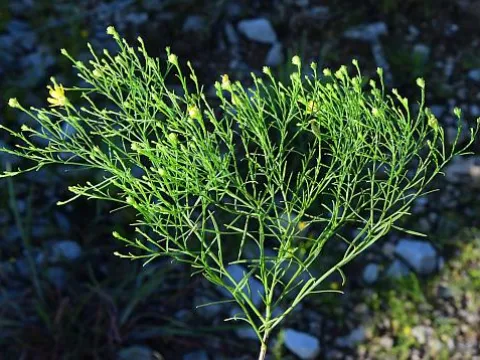
Amphiachyris
Amphiachyris
Amphiachyris is a genus of herbaceous annual plants within the Asteraceae family. Its most notable species, Amphiachyris dracunculoides, is commonly known in its native North American range as broomweed or annual broomweed.
What the section contains
Amphiachyris
The plant is native to the central and southern United States, specifically thriving in the prairie ecosystems of states like Texas, Oklahoma, and Kansas. It is well-adapted to habitats characterized by rocky, dry soils and high levels of direct solar radiation.
Environmental requirements for cultivation include well-drained, neutral-to-alkaline soils. The plant is notably intolerant of waterlogged conditions, which can lead to rapid deterioration of its primary root system, making site selection crucial for success.
Climate adaptation is a key feature, as Amphiachyris is highly resistant to heat and drought. It requires full sunlight exposure to maintain its characteristic growth habit and to promote vigorous branching during the flowering season.
Agrotechnical practices focus on providing adequate spacing to avoid density-related issues. Due to its drought resistance, irrigation is rarely needed once the plant is established, allowing for efficient cultivation in semi-arid regions.
Primary threats to Amphiachyris include various soil-borne pathogens, particularly fungi that thrive in excessive moisture. These conditions can cause root and collar rot, which are often fatal to the plant if drainage is not optimized.
Pest pressures are generally manageable but may include aphids and leaf-chewing insects during the early developmental stages. Monitoring for these pests is essential to prevent significant defoliation and reduction of plant vigor.
Weed competition is a significant threat during the initial stages of establishment. Because the plant exhibits slow early growth, suppression of competing invasive species is necessary until the plant is sufficiently developed to occupy the space.
Environmental stresses, while generally well-tolerated, can be exacerbated by overgrazing in rangeland settings. Proper management of the surrounding ecosystem is required to maintain a healthy population of this botanical species.
Overall, the plant demonstrates a high level of resilience to biotic and abiotic stressors. Disease control is best achieved through preventive measures, such as maintaining proper soil structure and optimal stand density rather than chemical intervention.