
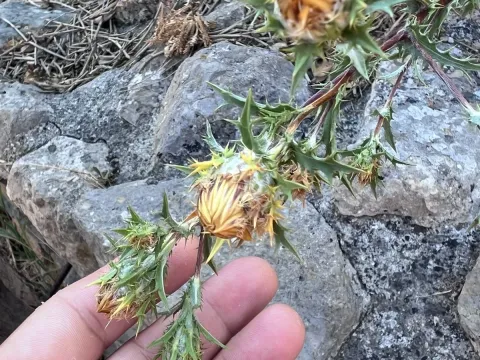
Corymbose carline thistle
Carlina corymbosa
The corymbose carline thistle (Carlina corymbosa) is a perennial herbaceous plant belonging to the Asteraceae family. Native to the Mediterranean region, this species is well-adapted to harsh environments including stony soils, arid lands, and roadside verges.
What the section contains
Corymbose carline thistle
Botanically, the plant is characterized by its stiff stems and typical corymb-shaped flower heads wrapped in prickly bracts. Its deep taproot system allows it to reach water reserves in dry soils, making it an excellent example of a drought-tolerant xerophytic plant.
For successful cultivation, the plant requires high levels of solar radiation. It thrives in open fields where it can receive direct sunlight throughout the day. It is highly intolerant of waterlogged soil, making well-drained, sandy, or rocky soil substrates the most suitable choice.
The cultural practices for this plant are minimal once it is established, as it requires very little fertilization. Soil pH should ideally be neutral or slightly alkaline, reflecting the natural calcareous soils found in its native habitat.
The plant has found its niche in traditional medicine due to its therapeutic properties and in landscaping as a decorative element for xeriscaping projects. Its ability to retain shape after drying makes it valuable for the floral industry.
The primary threats to Carlina corymbosa are fungal infections such as root rot and stem decay, which are triggered by excessive humidity or poor soil drainage. Maintaining dry, airy conditions is the best preventive measure.
Pests that may affect this plant include aphids and various beetles that thrive in the Asteraceae family. These insects can cause significant damage to the floral parts and leaves, reducing the plant's overall vitality and aesthetic appeal.
Integrated pest management should be employed, focusing on regular monitoring and using biological control agents where possible. Avoid the excessive use of chemical pesticides if the plant is intended for medicinal usage.
Weed management is vital during the initial establishment phase. As a relatively slow-growing perennial, the corymbose carline thistle can be easily suppressed by fast-growing weeds in its early development stages.
Overall, the resilience of this species against environmental stressors is high. However, growers must ensure that the planting site is correctly prepared with adequate drainage to avoid common fungal issues associated with stagnant moisture.