
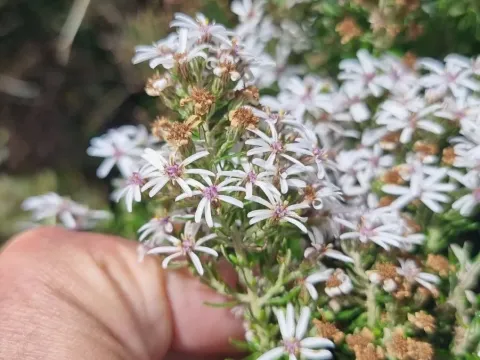
Olearia ramulosa
Olearia ramulosa
Olearia ramulosa, commonly known as the twiggy daisy bush, is a perennial evergreen shrub belonging to the Asteraceae family. Native to Australia, it is well-adapted to a variety of habitats ranging from woodlands to arid regions, showcasing its robust nature.
What the section contains
Olearia ramulosa
Botanically, the plant is distinguished by its highly branched growth habit and small, narrow, often hairy leaves. During its blooming season, the shrub is covered in small, daisy-like flower heads that create a visually striking landscape feature.
Cultivation requires a position in full sun to ensure a compact, healthy shape. Soil conditions must be exceptionally well-draining; the plant thrives in sandy or light, gritty loams that prevent moisture stagnation at the root zone.
Regarding climate, the plant prefers temperate conditions. While it is relatively drought-tolerant once established, it requires consistent care during its initial growth phase and during prolonged dry spells to maintain vigour.
Routine horticultural practices include light pruning immediately after the flowering period. This promotes bushiness, prevents the plant from becoming woody and leggy, and encourages a prolific display of flowers in the following season.
The primary threats to Olearia ramulosa are root pathogens associated with waterlogged soil. Proper drainage management is the single most important factor in preventing terminal rot in cultivated settings.
Common pests include aphids and spider mites, which typically target new growth. Integrated pest management strategies, such as biological control or localized treatments, are recommended for maintaining plant health.
Powdery mildew can occur in environments with high humidity or poor air circulation. Spacing plants adequately and choosing an open, windy site significantly reduces the incidence of this fungal issue.
Mechanical damage during maintenance can serve as an entry point for pathogens. It is advised to use sharp, clean tools and to avoid wounding the main stems during standard trimming operations.
Environmental stress, such as extreme heat combined with high humidity, can also leave the plant susceptible to opportunistic infections. Monitoring for leaf yellowing or stunted growth is essential for early intervention.