
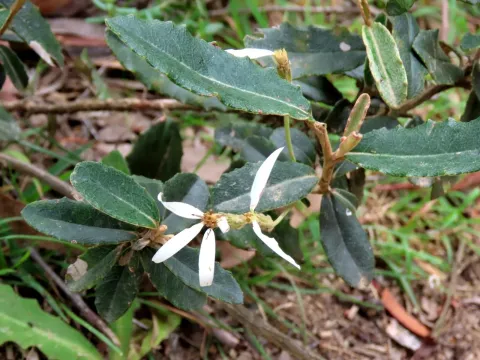
Olearia erubescens
Olearia erubescens
Olearia erubescens, commonly known as a type of moth daisy bush, is an evergreen shrub belonging to the Asteraceae family. Native to southeastern Australia and Tasmania, this plant is well-adapted to cool-temperate environments.
What the section contains
Olearia erubescens
The plant thrives in well-drained, slightly acidic soil types. It requires a location with plenty of sunlight, though it benefits from light shade during the hottest parts of the day to prevent foliage burn and excessive moisture loss.
Climatic requirements involve moderate temperatures, as the plant is not fully frost-hardy in severe winter conditions. Providing a sheltered position against a wall or in a conservatory can help maintain its health in cooler climates.
Botanically, it features leathery, elliptical leaves with a characteristic white or brownish tomentose undersurface. The daisy-like flower heads are white with reddish or pinkish centers, providing high aesthetic value during the flowering season.
In terms of usage, it is primarily valued for ornamental purposes in horticulture. It is frequently employed in woodland-style gardens, coastal landscapes, and as a structural element in mixed shrub borders.
Root rot is the most significant threat to Olearia erubescens, usually caused by waterlogging. Ensuring the planting medium has excellent permeability is the primary defense strategy for growers.
Pests such as aphids and spider mites can infest the plant, particularly in dry or confined conditions. These pests can cause leaf curling and overall weakening of the shrub if not managed effectively.
Powdery mildew is a common fungal issue that manifests as a dusty white coating on leaves, favored by poor air circulation. Proper spacing between plants significantly reduces the risk of such outbreaks.
Scale insects can also attach to stems, leading to stunted growth. Manual removal or appropriate horticultural oils can be used to treat early stages of infestation without damaging the plant's sensitive tissues.
Regular monitoring of soil pH is necessary, as an imbalance can interfere with nutrient uptake, leading to yellowing of the leaves (chlorosis). Balanced fertilizing helps maintain the vibrant color of the foliage and flowers.