
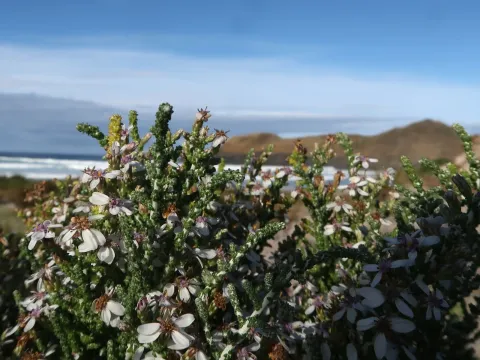
Olearia lepidophylla
Olearia lepidophylla
Olearia lepidophylla is an evergreen shrub belonging to the Asteraceae family. Native to Australia, this plant is well-adapted to harsh environmental conditions, often found in arid and semi-arid landscapes.
What the section contains
Olearia lepidophylla
The plant is botanically distinguished by its unique foliage, consisting of small, scale-like leaves that are pressed close to the stem. This adaptation allows the plant to thrive in regions with low precipitation and high solar radiation.
Successful cultivation requires well-draining, gritty, or sandy soil. It is intolerant of heavy, clay-based soils that retain moisture, as poor drainage is the primary cause of root system failure in this species.
This shrub prefers full sun exposure to maintain its dense, compact habit. It shows remarkable resilience to long periods of drought, making it an excellent choice for low-maintenance, water-wise gardening in appropriate climate zones.
Agrotechnical management is minimal, focusing on providing an open, sunny location with protection from harsh winter frost. Pruning should be light and performed after the flowering period to maintain structure.
Root rot, caused by Phytophthora or other water-borne fungi, is the most common disease. It usually arises due to improper watering practices or heavy, waterlogged soil conditions.
Pests such as scale insects and spider mites can occasionally affect the plant. These pests usually target weakened plants, thriving in hot and dry environments where the plant's natural defenses may be lowered.
Prevention involves ensuring adequate airflow around the plant canopy. Planting in elevated beds or on slopes can significantly improve drainage and reduce the risk of humidity-related fungal issues.
Integrated pest management should be employed, prioritizing the use of horticultural oils for scale insects and ensuring the plant remains sufficiently hydrated to withstand mite infestations.
Monitoring the plants throughout the growing season is essential for early detection. Any signs of yellowing or wilting leaves should be investigated immediately to prevent the spread of infections to neighboring plants.