
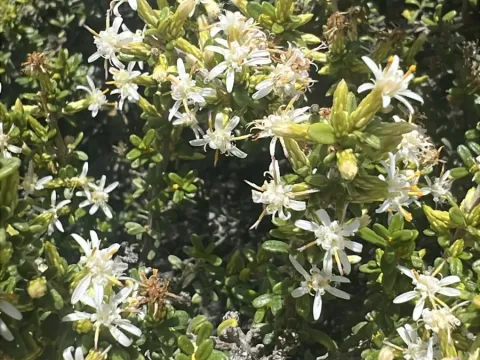
Olearia solandri
Olearia solandri
Olearia solandri is a species of flowering plant in the family Asteraceae. Native to New Zealand, this hardy evergreen shrub is widely recognized for its resilience in coastal environments and its distinctive aesthetic appeal.
What the section contains
Olearia solandri
The plant features small, linear, dark green leaves that are densely covered with buff-colored tomentum on the underside. This botanical feature provides a subtle golden shimmer to the foliage, especially when the shrub is moved by the wind.
Cultivation requires well-drained soil, as the plant is highly sensitive to waterlogged conditions. It thrives in sandy or rocky substrates and can tolerate significant salt exposure, making it an excellent choice for seaside plantings.
The climate requirements for Olearia solandri include full sun exposure and protection from severe, prolonged frosts. Once established, the plant exhibits remarkable drought tolerance, requiring minimal supplemental irrigation.
In terms of хозяйственного (economic/landscaping) usage, the shrub is primarily utilized for coastal windbreaks, privacy hedges, and rock gardens. Its dense growth habit makes it an effective barrier against high-velocity winds.
The primary threat to the health of Olearia solandri is root rot caused by poor soil drainage. Overwatering, especially during dormant or cool periods, can quickly lead to irreversible damage to the root system.
Pests such as mealybugs and scale insects may occasionally infest the dense branches. Regular monitoring and physical removal of infested foliage are recommended before resorting to chemical interventions.
Fungal diseases like powdery mildew can occur if the plant is grown in areas with high humidity and poor air circulation. Proper spacing between individual plants is essential to ensure a healthy microclimate.
Young plants are particularly vulnerable to weed competition. Mulching the base of the shrub helps conserve moisture while suppressing invasive herbaceous weeds that compete for nutrients.
To ensure long-term health, apply pruning to remove dead or diseased stems annually. Keeping the base of the plant free from debris prevents the accumulation of pathogens that could compromise the plant's structural integrity.