
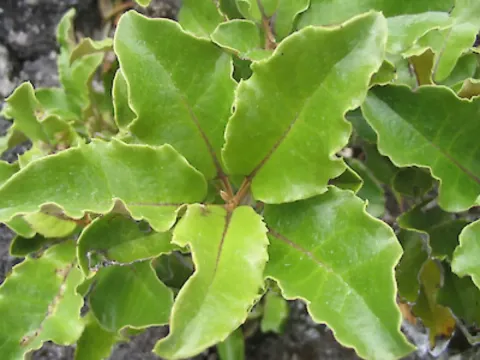
Olearia furfuracea
Olearia furfuracea
Olearia furfuracea is a robust evergreen shrub belonging to the Asteraceae family. Native to New Zealand, it is widely recognized for its leathery foliage which features a distinct scurfy, silvery underside, providing high aesthetic value to ornamental plantings.
What the section contains
Olearia furfuracea
Cultivation requires well-draining, nutrient-rich soil with a neutral to slightly acidic pH balance. The plant is particularly sensitive to waterlogged conditions, which makes site selection for proper drainage an essential part of the pre-planting soil preparation process.
The shrub thrives in sunny, sheltered locations, as it prefers protection from harsh, drying winds. Although it exhibits some tolerance to light frosts, it performs best in temperate climates; in cooler regions, it should be protected during winter or kept in containers.
Standard agrotechnical practices for this crop involve maintaining consistent moisture levels during the establishment phase. Mulching the base of the shrub is highly recommended to retain soil moisture and regulate temperature fluctuations around the root zone throughout the year.
The primary use of Olearia furfuracea is in landscape design and horticultural projects. It is frequently employed as a windbreak, a screening plant for coastal gardens, or as a structural element in modern garden designs, often requiring annual pruning to maintain shape.
The plant is susceptible to various fungal pathogens, predominantly those causing root rot, especially in stagnant soil conditions. Effective disease management involves maintaining proper soil aeration and avoiding excessive overhead irrigation during periods of high humidity.
Pest management focuses on controlling sap-sucking insects like scale insects and mealybugs. Regular monitoring of the underside of the leaves is crucial, and the application of systemic horticultural oils or insecticides should be considered if an infestation is detected.