
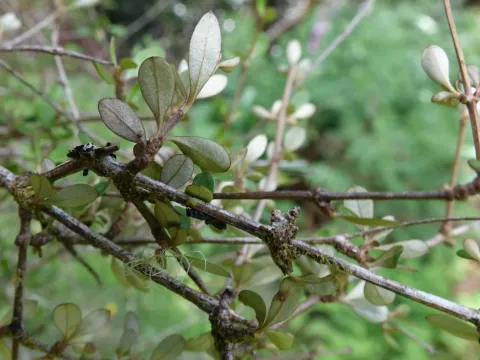
Olearia laxiflora
Olearia laxiflora
Olearia laxiflora is an evergreen shrub belonging to the Asteraceae family. Native to New Zealand, it is widely recognized in horticultural circles for its aesthetic appeal, dense foliage, and fine texture that makes it a perfect choice for hedging or decorative borders.
What the section contains
Olearia laxiflora
Botanically, the plant features narrow, often pubescent leaves that help the shrub survive in coastal environments. The small, daisy-like flowers are produced in loose clusters, providing a delicate and airy appearance during the main flowering season in late spring and early summer.
To cultivate this plant successfully, one must ensure a site with well-drained soil. It thrives in sunny locations protected from harsh, cold winds. The soil pH should ideally be neutral or slightly acidic, and the medium must not retain excessive moisture to prevent root damage.
Regarding climate, Olearia laxiflora prefers temperate conditions. While it is hardy in many maritime regions, it requires winter protection or sheltered planting spots in areas prone to hard frosts, as prolonged exposure to freezing temperatures can cause significant foliage burn.
Agrotechnical maintenance includes regular pruning after flowering to maintain the desired shape and density. Fertilizer application should be moderate, focusing on a balanced NPK ratio during the early spring to support healthy vegetative growth throughout the season.
The primary threats to Olearia laxiflora are fungal pathogens, specifically those causing root rot and leaf spot diseases. These conditions are typically exacerbated by poor air circulation around the canopy and waterlogged soil conditions during wetter months of the year.
Insects such as aphids and scale insects pose a recurring challenge for this species. Aphids tend to attack the tender growing tips, causing distortion of leaves, while scale insects adhere to stems and branches, sapping the plant of vital nutrients over time.
Spider mites can also become a problem, particularly in dry, hot weather when the humidity levels around the shrub fall below the optimal range. Regular misting or the use of targeted acaricides can help manage mite populations before they cause visible damage.
Effective pest management involves a combination of mechanical removal of infected parts and the application of horticultural oils or systemic insecticides. Ensuring that the plant is not over-crowded helps significantly in reducing the risk of pest outbreaks.
Sanitation practices are essential for long-term health; this includes the prompt removal of fallen debris and diseased foliage. Such measures minimize the availability of substrates where fungi and insect pests could otherwise overwinter and spread in the garden.