
Olearia rani
Olearia rani
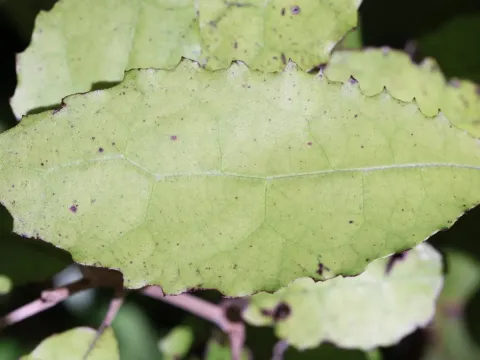
Olearia rani, commonly known as the heketara, is an evergreen shrub belonging to the Asteraceae family. Native to the diverse forests of New Zealand, this plant is well-regarded for its glossy leaves and striking silver undersides.
What the section contains
Olearia rani
The plant thrives in well-draining, fertile soils that are kept consistently moist but not waterlogged. In terms of location, it prefers sites that offer protection from harsh winds while receiving ample amounts of sunlight or partial shade.
From an agrotechnical perspective, Olearia rani requires regular monitoring of soil acidity, as it prefers slightly acidic to neutral conditions. Consistent moisture levels during the growing season are crucial for the development of its dense foliage.
Botanically, it is characterized by its large, leathery leaves and white daisy-like flower heads that bloom in clusters. This visual contrast between the dark upper leaf surface and the light underside makes it a standout choice for ornamental planting.
In landscaping, it serves as an effective windbreak and a structural element in native-focused gardens. Its relatively fast growth rate makes it a reliable choice for establishing green boundaries in mild temperate climates.
Primary threats to Olearia rani include root rot caused by poor soil drainage and stagnant water. Implementing a proper drainage system is the most effective preventative measure against these fungal pathogens.
Pests such as scale insects and aphids may occasionally infest the plant, particularly in sheltered environments with low airflow. Regular inspection and the use of insecticidal soap are recommended for managing minor infestations.
Leaf spot diseases can occur during prolonged periods of high humidity. To mitigate this risk, gardeners should ensure adequate spacing between plants to promote better air circulation and leaf drying.
Stem cankers may develop if the plant is pruned with unsterilized tools or if it suffers from significant environmental stress. Proper tool maintenance and clean cutting techniques are essential for plant longevity.
Environmental stressors like extreme frost can cause dieback in young or sensitive specimens. Providing protective coverings during severe weather events can help preserve the health and vigor of the shrub during winter.