
Leucosyris parviflora
Leucosyris parviflora
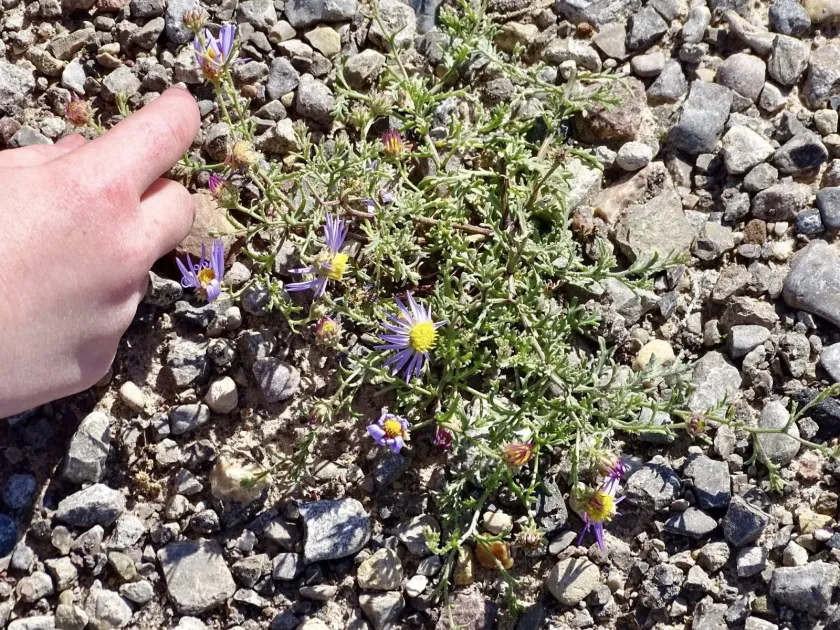
Description
Growing requirements
Leucosyris parviflora is a perennial herbaceous plant belonging to the Asteraceae family. Known for its resilience, this species has adapted to survive in harsh, arid environments, making it a subject of interest for agricultural systems in marginal lands.
The primary soil requirement for this crop is excellent drainage. Sandy or sandy-loam soils are ideal as they prevent water accumulation around the root collar. The plant is sensitive to waterlogging, which often acts as a limiting factor for its survival and productivity.
Regarding climate, the plant thrives in regions with high solar radiation and low relative humidity. It is considered a drought-tolerant species, which allows it to maintain physiological activity during periods when water availability is significantly restricted.
Agricultural management should focus on maintaining a low-density planting scheme to minimize nutrient competition. Proper soil aeration is critical, and mechanical tillage should be performed with care to avoid damage to the taproot system, which is essential for nutrient uptake.
The botanical structure of the plant suggests it is well-suited for low-input farming systems. Its ability to extract moisture from deeper soil layers is a key trait, potentially offering benefits for soil stability and biomass production in semi-arid agricultural zones.