
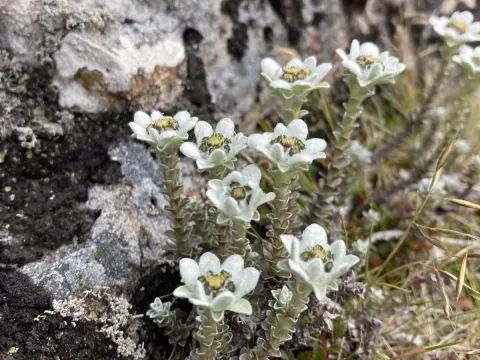
Leucogenes
Leucogenes
Sowing Leucogenes seeds requires a strategic approach, usually starting in late winter to ensure the plants are robust by early summer.
What the section contains


Leucogenes
Cold stratification of the seeds for a period of at least four weeks is essential to break dormancy and trigger successful germination.
The sowing medium should be highly mineral-based, typically consisting of a mix of sand, grit, and very little organic matter.
Surface sowing is recommended as the seeds are light-dependent and benefit from the exposure to diffused natural light during the initial phase.
Seedlings should be handled with care during the transplanting phase to avoid disturbing the delicate root system which is prone to shock.
Leucogenes belongs to the Asteraceae family and is native to the harsh, exposed alpine environments of New Zealand mountain ranges.
This crop thrives in conditions that mimic its natural habitat, requiring free-draining, stony, and nutrient-poor soil to prevent root issues.
Full sun exposure is a non-negotiable requirement for maintaining the characteristic silvery foliage and compact growth habit of the plant.
Temperature management is critical, as Leucogenes prefers cool, airy environments and often struggles in high-humidity, low-altitude climates.
Watering should be precise, focusing on the soil rather than the foliage, to prevent moisture accumulation in the dense, hairy leaf structures.
Root rot caused by Phytophthora or Pythium species is the most significant threat to Leucogenes, triggered by poor drainage or overwatering.
Botrytis, or grey mold, may develop in periods of high humidity if the air circulation around the plants is insufficient.
Sap-sucking insects like aphids can cluster on the growing tips, causing distortion of the leaves and affecting the overall aesthetic appearance.
Slugs and snails can severely graze on the plant during the early growth stages, requiring integrated pest management practices.
Preventative measures should include the use of grit mulching around the root crown to ensure it stays dry throughout the growing season.