
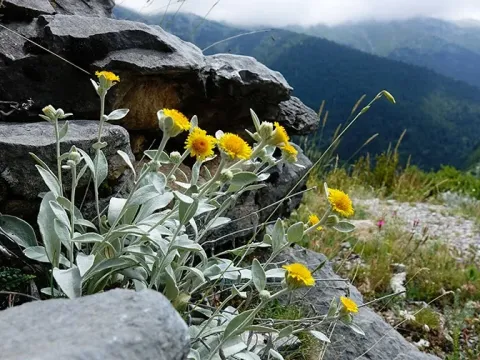
Inula verbascifolia
Inula verbascifolia
Inula verbascifolia is a perennial herbaceous plant belonging to the Asteraceae family. Known for its medicinal properties, this culture is valued for its resilient growth in Mediterranean climates.
What the section contains
Inula verbascifolia
Propagation is typically achieved via seeds, which are sown in early spring or late autumn. The seeds require well-draining soil and a sunny location to germinate successfully.
When sowing, seeds should be barely covered with soil, as they often require light for optimal germination. Spacing should be approximately 50 cm between plants to allow for airflow.
Seedlings develop slowly during the first year, focusing their energy on establishing a deep, thick root system rather than above-ground biomass.
For large-scale cultivation, direct drilling into prepared seedbeds is preferred, ensuring the soil is fine-textured to accommodate the small seeds.
This plant thrives in full sun and is remarkably drought-tolerant, making it suitable for areas with hot, dry summers and poor soil quality.
It prefers well-drained, rocky, or calcareous soils. It is essential to avoid sites with waterlogging, as the roots are highly susceptible to rot if left in saturated conditions.
While the plant is hardy, it benefits from moderate phosphorus levels, which support strong root development, the most economically valuable part of the plant.
During the growing season, maintenance is minimal once established. Occasional weeding is necessary to prevent competition for nutrients during the initial growth stages.
No special irrigation is required once the plant is mature, though light watering during extreme heatwaves can improve the overall yield of the roots.
Inula verbascifolia is relatively resistant to many pests, but it can be susceptible to aphids and mites during prolonged periods of drought and high heat.
Fungal diseases such as powdery mildew or root rot are the primary threats, especially if the soil is too heavy or poor drainage is present on the plot.
Maintaining proper spacing between rows is a critical preventive measure to ensure adequate air circulation and reduce the humidity around the foliage.
Crop rotation is strongly recommended to minimize soil-borne pathogens. Avoid planting on sites where other members of the Asteraceae family were recently grown.
Sanitation practices, such as removing dead foliage at the end of the season, help in reducing the overwintering of pests and fungal spores in the field.
Harvesting usually takes place in the autumn of the second or third year, once the stems turn yellow and the plant enters dormancy.
The rhizomes are carefully unearthed, cleaned of dirt, and washed. Any fine rootlets are removed, and the rhizomes are sliced for uniform drying.
Drying must occur in a shaded, well-ventilated area or in mechanical dryers at low temperatures (around 40°C) to prevent the loss of essential oils.
Once brittle, the roots are considered fully dry and can be processed into powder or used in traditional medicinal extracts.
Storage should be handled in airtight containers in a cool, dark room to maintain the biological potency of the plant material for several years.