
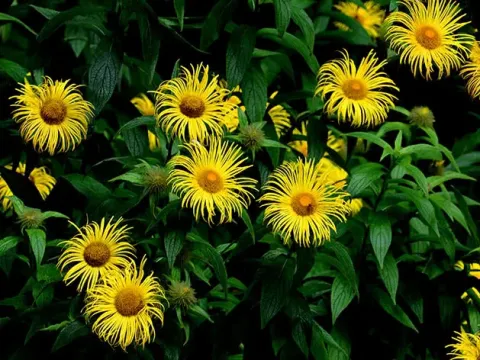
Inula orientalis
Inula orientalis
Sowing of Inula orientalis is best performed in late autumn or early spring, as the seeds require a period of stratification to germinate successfully.
What the section contains
Inula orientalis
Seeds should be sown at a shallow depth of 1–2 cm, as they are very small and require light and contact with moist soil to break dormancy.
Row spacing should be maintained at 50–60 cm to allow the plants enough room to develop their signature basal leaf rosettes without competition.
Seedlings typically emerge within 2–3 weeks, and it is vital to keep the area free of weeds during this early stage of development.
A target density of 4–6 plants per square meter ensures an ideal environment for the development of healthy, harvestable rhizomes.
Inula orientalis belongs to the Asteraceae family and is a robust perennial that thrives in sunny locations with well-drained, fertile soil.
The plant prefers loam or sandy loam soil compositions that prevent waterlogging, which is essential to avoid root rot issues.
It is a cold-hardy species, making it suitable for temperate climates where it can overwinter safely without additional protective measures.
Regular moisture is critical during the first half of the growing season to ensure vigorous leaf production and subsequent energy storage in the roots.
Incorporating organic matter during soil preparation provides the necessary nutrients for the crop to reach its full potential over several years.
The yield of Inula orientalis is based on root biomass, which reaches its peak maturity during the third or fourth year of the plant's life cycle.
When managed properly, the crop can provide a consistent supply of rhizomes, which are highly valued for their phytochemical content.
Farmers can expect a yield of 5 to 8 tons of fresh roots per hectare, which results in approximately 2–3 tons of dried medicinal raw material.
Removing flower stalks early in the season encourages the plant to allocate more resources to the root system, significantly improving overall yield.
Success depends on maintaining a clean field, free from perennial weeds that could otherwise compete for soil nutrients and water.
Fungal diseases are the primary threat, particularly in regions with high rainfall or poor air circulation within the plant canopy.
Powdery mildew may occur during warmer months, potentially reducing the plant's photosynthetic capacity if left untreated for long periods.
Root rot is the most serious risk, often caused by heavy, waterlogged soils, which renders the primary harvestable product completely unusable.
Pests like aphids are generally minor, but they should be monitored to prevent the spread of viruses that could weaken the plant stands.
The best defense against these threats is proper site selection, adequate spacing, and strict adherence to crop rotation practices.
Harvesting the roots of Inula orientalis takes place in late autumn after the foliage has died back, or in early spring before new growth appears.
The rhizomes are lifted, thoroughly cleaned of soil, washed in running water, and trimmed of all fine root hairs before processing.
The raw material is sliced into manageable pieces and air-dried to remove initial moisture before undergoing final kiln drying.
Controlled drying at temperatures between 40–50 degrees Celsius ensures the preservation of essential oils and other key therapeutic compounds.
Final product storage should occur in a cool, dry, and well-ventilated area to maintain quality and protect the dried roots from pests and moisture.