
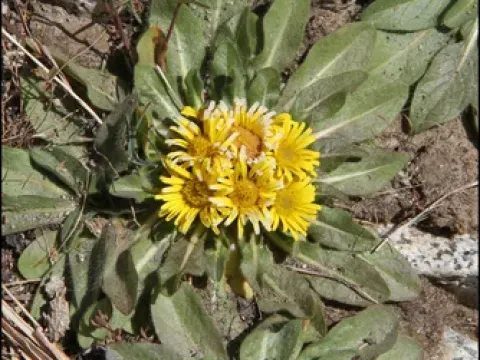
Inula rhizocephala
Inula rhizocephala
Inula rhizocephala, a member of the Asteraceae family, is a perennial herbaceous plant recognized for its pharmacological potential. In agricultural practice, seeds should be sown in late autumn or early spring, provided they have undergone a stratification process to break dormancy and ensure uniform germination.
What the section contains
Inula rhizocephala
Because the seeds are extremely small, shallow sowing at a depth of 1 to 1.5 centimeters is recommended. Maintaining proper spacing—usually 45–60 centimeters between rows—is vital to provide the growing rosette with enough space for root development.
Germination is often slow, and seedlings require consistent moisture levels in the topsoil during the first few weeks. The seedbed must be thoroughly prepared and free of competing weeds, as the young Inula plants are quite sensitive to shade and resource competition.
The first year of growth focuses primarily on establishing the root system and developing the basal leaf rosette. During this phase, minimal harvesting is performed, as the energy reserves of the plant are directed towards building the biomass of the roots for future harvests.
For large-scale cultivation, transplanting seedlings from a greenhouse is often more effective than direct seeding. This method ensures optimal plant density and reduces the risks associated with the early, vulnerable stages of plant development.
This plant thrives in temperate climates and is relatively hardy, tolerating cold winters well. It prefers sunny locations; exposure to direct sunlight is essential for the accumulation of active compounds, including inulin and essential oils, within the roots.
Soil requirements for Inula rhizocephala are focused on well-drained loams or sandy loams with a neutral to slightly acidic pH. Avoiding waterlogged or poorly aerated soils is crucial, as excessive moisture often leads to root decay and decreased quality of the herbal material.
Though the plant is adaptable, it responds positively to moderate fertilization with organic matter applied during soil preparation. Excessive nitrogen levels should be avoided, as this promotes excessive foliage growth at the expense of root development, which is the primary value of the crop.
Regular cultivation between rows is recommended throughout the growing season to improve soil aeration and moisture retention. Proper maintenance of the soil structure helps the roots expand into the deeper layers of the substrate, increasing the total harvest yield.
Weed control is the most demanding aspect of agronomy for this species, especially during the first year. Manual weeding or light mechanical cultivation is necessary to maintain clean rows until the plants are large enough to outcompete any surrounding flora.
The primary economic product of Inula rhizocephala is its root and rhizome, which are rich in therapeutic agents used in traditional and modern medicine. The harvest is typically conducted once the plant has reached its second or third year of growth.
The yield of medicinal roots can be substantial when the plants are grown in optimal soil and provided with adequate space. The harvest is timed to capture the period when the concentration of essential oils and polysaccharides, like inulin, is at its peak.
In the pharmaceutical industry, these roots serve as a base for anti-inflammatory, expectorant, and choleretic medications. The raw material is processed into extracts, powders, or tinctures, which are in steady demand in the global healthcare market.
Value-added processing, including controlled drying and milling, is essential for maintaining the bioactive properties of the raw material. Modern drying technologies are used to remove moisture efficiently without degrading the heat-sensitive chemical components.
By optimizing the harvest and storage processes, farmers can significantly increase the profitability of Inula cultivation. Specialized storage conditions ensure that the final product remains potent and stable for long-term supply chains.
The most common threat to Inula rhizocephala is root rot, which typically occurs in conditions of poor drainage or high humidity. Managing water levels and ensuring good soil aeration are the primary defensive strategies against these fungal pathogens.
Pests such as wireworms and various aphids can cause damage during the active growing season. Field monitoring is essential to catch early signs of infestation, and biological control methods are preferred to keep the raw material free of pesticide residues.
Powdery mildew may manifest on the foliage under high humidity and dense planting conditions. Improving air circulation by thinning the plants or spacing them appropriately significantly reduces the risk of such outbreaks across the plantation.
Weed interference is the greatest non-biological threat, as it can completely suppress young seedlings. Effective management of the site prior to planting is the best strategy to ensure the crop establishes itself before competitive plants can take over.
Phytosanitary maintenance involves removing dead plant parts and ensuring that the field remains clean of infected materials. This reduces the risk of cross-contamination and helps maintain the overall health of the crop cycle year after year.
Harvesting usually takes place in autumn, as the foliage turns yellow and withers. This natural senescence indicates that the plant has completed its translocation of nutrients, resulting in the highest quality of roots.
Mechanized lifting using custom harvesters is the standard for large-scale operations. It is important to adjust the depth of the tools carefully to extract the entire root mass without slicing or causing excessive mechanical damage to the rhizomes.
Immediately after harvest, the roots must be cleaned of soil and debris. Washing in a steady, gentle flow of water is necessary to remove contaminants while ensuring the skin of the root remains intact, preventing the loss of essential compounds.
Cutting the cleaned roots into smaller pieces serves to increase the surface area, which dramatically speeds up the drying process. This step is crucial for inhibiting mold growth and ensuring the uniform drying of the inner root tissue.
Properly dried material should be stored in cool, dark, and dry locations to maintain its medicinal efficacy. Using breathable packaging materials helps preserve the quality of the roots until they are ready for final pharmaceutical processing.