
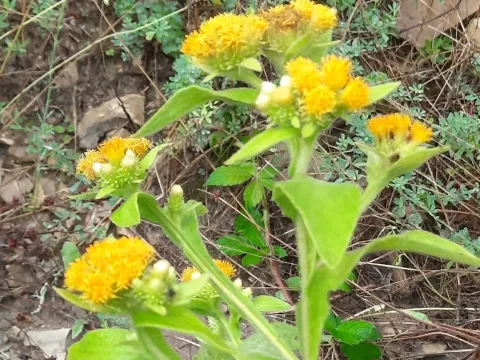
Inula thapsoides
Inula thapsoides
Inula thapsoides, a member of the Asteraceae family, is a perennial herb characterized by its significant rhizome development. For successful cultivation, seeds are sown either in late autumn or early spring into well-prepared soil.
What the section contains
Inula thapsoides
Autumn sowing allows seeds to undergo natural stratification, which results in more uniform and vigorous germination. Seeds are planted at a depth of 1–2 centimeters, as they require light to stimulate the germination process.
Commercial cultivation typically employs a row-seeding method with intervals of 45–60 centimeters. This spacing is essential for facilitating mechanized weed control and soil aeration during the early stages of plant development.
Once seedlings emerge, thinning is required to maintain a distance of 20–30 centimeters between plants. Proper spacing ensures the development of a robust basal leaf rosette and promotes energy storage in the roots.
During the first year, the plant focuses on establishing its root system and forming a large leaf rosette, which acts as the foundation for high productivity in subsequent growing seasons.
The plant has moderate climatic requirements and prefers sunny, well-ventilated locations. Inula thapsoides is quite hardy and capable of surviving temperate winters without the need for additional protective covers.
The ideal soil types are loamy or sandy substrates with good moisture retention capabilities. It is critical to avoid areas with high water tables or poor drainage, as standing water can lead to root rot.
Inula responds positively to the application of organic fertilizers, such as compost, during pre-planting soil preparation. Nitrogen applications in early spring can further stimulate vegetative growth during the start of the season.
Regular cultivation of the soil between rows is essential to break surface crusts and ensure root zone aeration. While the plant can tolerate short periods of drought, consistent irrigation significantly boosts biomass and active compound concentration.
Maintaining a neutral to slightly acidic soil pH is crucial for optimal nutrient availability. If the soil is too acidic, liming should be performed before planting to ensure proper development.
The yield of Inula thapsoides is heavily dependent on the management practices and the age of the plantation. The highest concentration and volume of rhizome harvest are typically achieved in the second or third year.
On average, growers can expect a yield of 15 to 25 quintals of dry root material per hectare. These figures vary based on specific environmental conditions and the intensity of care provided.
Biologically active compounds, which are the primary objective of cultivation, accumulate most intensely in the roots towards the end of the vegetative period. Timely harvesting is essential to meet industrial quality standards.
Implementing intensive farming techniques, such as the use of specialized micro-fertilizers, can increase overall yield by 15–20%. Monitoring winter survival rates is also vital for managing plantation density and total output.
Overall productivity is also a function of the quality of planting stock and the precision with which agronomic measures are executed throughout the entire life cycle of the crop.
Primary threats to Inula thapsoides include fungal infections such as powdery mildew and various root rots, which are particularly prevalent in years with excessive rainfall. Proper crop rotation is the best preventive measure.
Pests, including leaf-eating insects and aphids, can damage the leaf rosettes early in the season. Regular monitoring and the application of biological control methods are recommended to keep pest populations below economic thresholds.
Soil-dwelling pests like wireworms can damage rhizomes, reducing the quality of the harvested product. Strategic field selection and avoiding monoculture for more than three years help minimize these risks.
Weed competition during the initial growth phase can severely inhibit development. Using mulch or frequent mechanical weeding is necessary to ensure the plants have access to nutrients and light.
Maintaining correct plant density is not just about yield, but also about disease prevention, as overcrowding creates poor air circulation, facilitating the spread of various pathogens.
Harvesting is primarily conducted in autumn when the aerial parts begin to yellow and wither. This timing corresponds with the peak accumulation of active compounds and inulin within the rhizomes.
Roots are extracted using specialized machinery to minimize physical damage to the plant parts. After extraction, they are washed to remove soil, rootlets, and remaining stalk debris.
Initial processing includes slicing the roots into smaller fragments to facilitate faster drying. This is a critical step to prevent spoilage and ensure the preservation of the herb's medicinal properties.
Drying must be performed in controlled environments at temperatures not exceeding 40–50 degrees Celsius. Excessive heat can degrade the essential oils and volatile compounds present in the material.
Storage of the dried material requires dry, well-ventilated facilities protected from direct sunlight. Properly prepared and stored product maintains its efficacy for several years in warehouse conditions.