
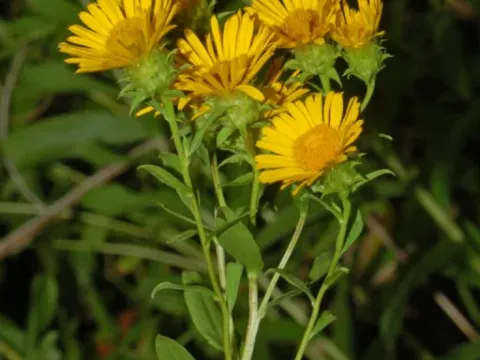
Inula spiraeifolia
Inula spiraeifolia
Sowing of Inula spiraeifolia is best performed in late autumn or early spring when soil temperatures reach 5–8 degrees Celsius. Autumn sowing is considered optimal because the seeds undergo natural stratification, which significantly improves field germination rates.
What the section contains
Inula spiraeifolia
The seeds should be sown at a depth of no more than 1–2 centimeters, as they are tiny and require near-surface placement to germinate efficiently. When using seedling methods, seeds are sown in greenhouses in March, and the seedlings are transplanted to the open field at the 3–4 true leaf stage.
The planting pattern must account for the plant's habit: an optimal distance between rows is 60–70 centimeters, with 30–40 centimeters between plants within the row. This provides sufficient space for root and aerial development.
The soil must be thoroughly prepared: leveled, cleared of perennial weeds, and provided with sufficient moisture reserves. In areas with low soil moisture, light rolling after sowing is essential to ensure proper seed-to-soil contact.
As a member of the Asteraceae family, the plant develops slowly in its first year, forming a basal rosette of leaves. The main stem growth and flower production occur in the second year, which must be considered when planning crop rotation cycles.
Inula spiraeifolia prefers well-lit areas with direct sunlight, as shading leads to elongated stems and a reduction in the concentration of bioactive compounds. The plant is characterized by high winter hardiness and the ability to tolerate moderate drought conditions.
The plant has moderate soil requirements but thrives best in light, fertile loams or chernozem soils with a neutral to slightly alkaline reaction. Heavy clay soils require the addition of soil amendments like sand or organic compost to improve structure.
Drainage is a critical factor: Inula does not tolerate stagnant water in the root zone, which triggers root rot. The groundwater level should be at least 1–1.5 meters below the soil surface to ensure healthy root development.
Management includes regular inter-row cultivation to prevent surface crusting and suppress weeds during the first two years of life. The application of mineral fertilizers, particularly phosphorus and potassium, significantly improves productivity and raw material quality.
The crop effectively utilizes rainfall, but during prolonged summer droughts, moderate irrigation is necessary to maintain leaf turgor and ensure normal formation of reproductive organs, especially if seed collection is planned.
Productivity of Inula spiraeifolia is measured by the yield of marketable biomass, including both aerial parts and underground organs. Green biomass yields under intensive cultivation can reach 15–20 tons per hectare, depending on planting density.
The maximum output of bioactive compounds is observed when raw material is harvested in the second or third year of growth. By this time, the root system reaches optimal dimensions, and the aerial part has accumulated sufficient essential oils and flavonoids.
Economic use includes the pharmaceutical industry, where the plant is valued for its inulin content, a high-quality prebiotic. Additionally, the plant is sought after in landscape design as a long-blooming perennial.
Harvest standardization requires strict adherence to timing, which preserves the therapeutic properties of the raw material. Subsequent drying must occur in well-ventilated facilities at temperatures not exceeding 40–45 degrees Celsius.
Profitability increases with the use of specialized machinery for root harvesting, which reduces labor costs and ensures the cleanliness of the final product, free from soil contamination and organic residues.
The main pests of Inula are aphids and various weevils that damage young leaves and flower buds in the spring. These can be managed using systemic insecticides or biological preparations based on entomopathogenic fungi.
Diseases are most commonly represented by powdery mildew, which develops in high humidity and poor air circulation. Prevention requires maintaining optimal plant density and removing all plant debris from the field after harvest.
Root rot is the most dangerous pathology under improper irrigation regimes or in waterlogged fields. Control is difficult, so the main emphasis is on strictly following agrotechnical standards and selecting appropriate sites for cultivation.
Leaf rust may appear in the second half of summer, reducing photosynthetic intensity. If early signs of the disease are detected, treatment with copper-based fungicides or bio-fungicides permitted for use on medicinal crops is recommended.
Crop protection also involves consistent weed control, as weeds often act as intermediate hosts for many fungal pathogens. Maintaining a clean field is a key factor in the phytosanitary well-being of the entire Inula plantation.
Aerial parts should be harvested during the period of mass flowering, when the concentration of beneficial substances in the leaves and inflorescences is at its peak. The cut material is quickly transported to processing facilities to prevent overheating and quality loss.
Rhizomes are harvested in late autumn after the growing season or in early spring before sap flow begins. During this time, the roots contain the highest concentration of inulin and other polysaccharides, which are essential for the processing industry.
After digging, the roots are cleaned of soil, washed with running water, and damaged parts are removed. This is a labor-intensive process that requires mechanization on larger commercial farms to ensure production profitability.
Drying is a critical stage: roots are cut into small pieces to ensure uniform moisture removal. Correctly dried raw material possesses a characteristic aroma and retains its medicinal properties throughout its shelf life, provided it is protected from moisture.
Finished product storage takes place in dry, dark, and well-ventilated warehouses using paper or fabric packaging. This prevents mold growth and pest infestation, ensuring the product remains viable for sale throughout the year.