
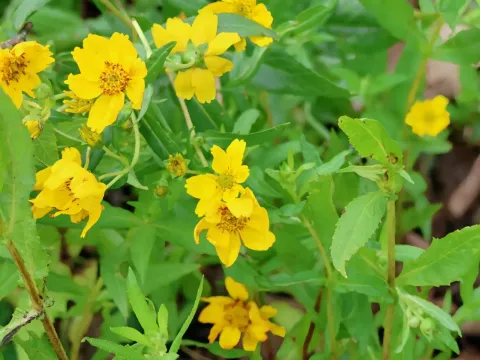
Guizotia abyssinica
Guizotia
Guizotia abyssinica, commonly known as Niger seed, is a warm-season crop belonging to the Asteraceae family. Successful establishment depends heavily on sowing time, which should occur once soil temperatures have consistently reached +15°C to +18°C, usually in late spring.
What the section contains

Guizotia abyssinica
The seeds are small and require a well-prepared, fine-textured seedbed to ensure good soil-to-seed contact. Sowing is typically performed in rows spaced 30 to 45 cm apart, allowing the plants sufficient space to branch and develop healthy foliage.
Depth of planting is a critical factor; placing seeds deeper than 3 cm can severely hamper emergence. Using calibrated precision seeders helps ensure the correct density, usually aiming for 150,000 to 200,000 plants per hectare depending on soil fertility.
Early season weed management is vital, as Niger seed grows slowly during the first few weeks after emergence. Selecting clean fields with a history of low weed pressure can significantly increase the success rate of the crop establishment.
Post-sowing rolling of the soil can improve moisture retention in the top layer, facilitating more uniform germination. This is particularly important in regions with semi-arid climates where surface moisture can deplete rapidly after planting.
Niger seed is well-regarded for its drought tolerance, making it a suitable crop for areas with moderate rainfall patterns. It performs best on well-drained, light-textured soils, including sandy loams and loams, which prevent waterlogging.
The crop is highly sensitive to excessive soil moisture; poorly drained soils often lead to root rot and stunted plant growth. Therefore, site selection should prioritize elevated areas or fields with efficient drainage systems to mitigate water-related risks.
As a light-loving plant, Guizotia abyssinica requires open areas with full sun exposure to reach its yield potential. Shaded environments tend to cause thin, elongated stems, which reduces the overall seed production and decreases oil quality.
While the crop is not strictly demanding in terms of soil fertility, moderate application of phosphorus and potassium fertilizers can improve root development and resistance to environmental stress, ultimately leading to higher harvest yields.
Crop rotation is recommended to break pest and disease cycles. Niger seed thrives when planted after cereals, which help maintain clean fields and ensure that the soil structure remains optimal for the root system development.
The yield of Niger seed typically ranges between 0.5 and 1.2 tons per hectare under standard farming practices. Yield levels are strongly influenced by the cultivar choice and the availability of moisture during the crucial flowering and seed-filling stages.
The economic value of the crop is primarily determined by its oil content, which usually averages between 35% and 40%. Producing high-quality oil requires careful handling of the crop during the maturation phase to prevent seed loss or degradation.
Environmental factors, particularly high temperatures during anthesis, can negatively affect pollination and seed set. In such cases, supplemental irrigation or the use of micronutrient boosters like boron can help improve the reproductive performance of the crop.
To maximize financial returns, farmers should monitor seed oil composition and weight. Larger seed size is generally preferred in the market, making optimal nutrition and weed control essential throughout the growing season.
Post-harvest evaluation often focuses on oil extraction efficiency and seed purity. Effective cleaning processes are necessary to meet commercial standards and ensure the product retains its value for food and industrial processing markets.
Guizotia abyssinica is generally hardy, but it remains susceptible to fungal diseases in humid conditions, including powdery mildew and gray mold. Preventive measures like adequate row spacing and strict crop rotation are the primary defenses.
Aphids represent one of the most common insect threats to Niger seed. These pests feed on the sap of young shoots, which can deform the plant and serve as a vector for viral diseases that significantly impact overall health and yield.
Occasional damage from cutworms or other chewing insects can affect plant stands. Integrated Pest Management (IPM) strategies, including regular field scouting, help farmers decide if chemical intervention is necessary to keep damage below economic thresholds.
Bird damage can occur during the emergence phase and sometimes during seed maturation. Using mechanical scaring devices or selecting planting times that avoid peak bird migration can reduce potential losses in vulnerable regions.
Because the crop is an excellent honey source and attracts beneficial pollinators, insecticide use must be managed carefully. Applications should be timed when pollinator activity is minimal to avoid harm to non-target insect populations.
Harvest timing is critical for Guizotia abyssinica because seeds mature unevenly across the flowering heads. Harvesting should begin when the involucral bracts turn dark and the lower leaves have dried significantly.
Two-stage harvesting is the most common practice, involving swathing or cutting the crop into windrows to allow for uniform drying and maturation. This method minimizes shattering losses that typically occur if the crop is left standing too long.
Direct combining is an option only if the crop reaches full maturity uniformly. In such cases, combine settings, particularly cylinder speed and air flow, must be adjusted carefully to prevent mechanical damage to the small seeds.
Once harvested, seeds must be dried to a moisture content of 12% or lower to ensure safe storage. High-moisture seeds are prone to heating and oil degradation, which can lead to rapid quality loss and reduced marketability.
Cleaning equipment, such as screen cleaners or gravity separators, should be used to remove foreign material and immature seeds. Proper storage in well-ventilated, cool facilities is essential for preserving the quality of the oil over extended periods.