
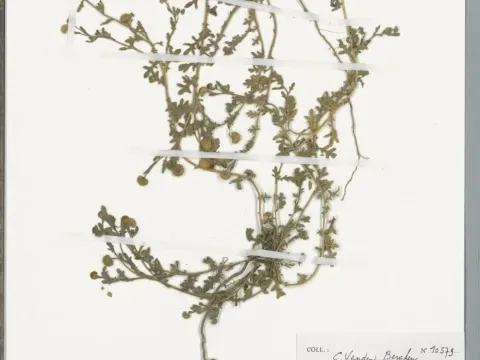
Grangea ceruanoides
Grangea ceruanoides
Grangea ceruanoides is typically cultivated as an annual herb, requiring a precise approach to seeding to ensure optimal field emergence. Sowing should ideally occur in the spring, allowing the soil to warm up sufficiently to support germination.
What the section contains
Grangea ceruanoides
The seeds are relatively small and require careful handling during planting. They should be sown at a shallow depth to facilitate exposure to light, which acts as a stimulant for the germination process in this particular species.
In commercial agriculture, precise row spacing is essential to facilitate mechanical weeding and ensure that every plant has adequate room for canopy development. Ensuring consistent soil-to-seed contact is a vital step during the planting process.
For regions with shorter growing seasons, starting seeds in a controlled environment or a nursery is recommended. This strategy helps ensure a more uniform and vigorous crop establishment once the young plants are transplanted to the field.
Maintaining adequate moisture levels immediately after sowing is crucial. Using light irrigation techniques helps prevent the displacement of seeds while ensuring the soil remains moist enough for the roots to establish.
As a member of the Asteraceae family, Grangea ceruanoides thrives in well-lit environments. It requires significant sunlight to reach its maximum productive potential and to ensure the proper synthesis of its active botanical compounds.
The crop performs best in well-drained soils, ideally with a neutral pH. It is sensitive to waterlogging, so fields should be leveled or have a natural slope to prevent the accumulation of excess water around the root zone.
Climatic conditions for this plant should be temperate and warm. It is not cold-hardy, meaning that protection against unexpected frosts is necessary for the survival and healthy growth of the biomass throughout the season.
Nutrient management involves applying balanced fertilizers, emphasizing potassium and phosphorus during the early bloom stage. This promotes stronger stems and increases the concentration of valuable essential oils within the leaves.
Cultural practices such as inter-row cultivation help keep the soil aerated and free from weeds. This allows the plant to focus its energy on growth rather than competing for sunlight and nutrients with invasive weed species.
Aphid infestations are a common issue for Grangea ceruanoides, as these insects target the tender stems and leaves. Controlling their population early is essential to prevent stunted growth and the spread of plant viruses.
Powdery mildew is a prevalent fungal disease that typically manifests in high-humidity conditions. It appears as a white, dusty layer on the leaves, which can severely hinder the plant's ability to photosynthesize effectively.
Root rot occurs if the drainage is insufficient or if irrigation is managed poorly. This condition can lead to the rapid decline of individual plants, necessitating the removal of affected biomass to protect the surrounding healthy crop.
Spider mites can become a problem in warm, dry weather. They feed by piercing the leaf cells, which results in discoloration and dry, brittle foliage, significantly reducing the quality of the harvested material.
Integrated Pest Management (IPM) strategies are highly recommended for this crop. By monitoring fields regularly, farmers can apply targeted interventions that protect the yield while minimizing the environmental impact on the field ecosystem.