
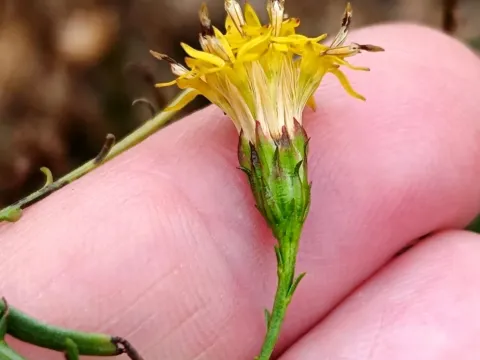
Goldilocks aster
Galatella linosyris
Goldilocks aster (Galatella linosyris) is a herbaceous perennial plant belonging to the Asteraceae family. It is naturally distributed across Europe and parts of Asia, typically inhabiting dry grasslands, rocky slopes, and steppe landscapes.
What the section contains
Goldilocks aster
The plant is highly drought-tolerant, making it an excellent choice for low-maintenance areas or xeriscaping. It requires full sunlight exposure to maintain its compact habit and to produce abundant flowering in late summer.
Botanically, this species is characterized by its linear, thread-like leaves and attractive yellow flower heads that lack ray florets. The plant typically reaches a height of 30–60 cm and forms a clump that persists for many years.
It prefers well-drained, nutrient-poor, and slightly alkaline soils. Heavy, clay-rich soils should be amended with sand or gravel to prevent waterlogging, which the plant does not tolerate well during the dormant season.
In terms of usage, Goldilocks aster is primarily cultivated as an ornamental plant in rock gardens and drought-resistant landscapes. Additionally, it serves as a late-season nectar source for bees and various pollinating insects.
The main threat to this species is excessive soil moisture and humidity, which can quickly lead to root rot and crown rot. Proper drainage is the most critical factor for ensuring the plant's long-term health.
Powdery mildew may occur in stagnant, humid conditions, causing foliage discoloration. Improving air circulation around the plants is essential for prevention and effective management of fungal pathogens.
Aphids are the most common pests, particularly during the active growing season. They cluster on young shoots and buds, potentially stunting the development of the flower heads if left unmanaged.
Some soil-dwelling insects may attack the roots in younger specimens. Regular monitoring and maintaining soil health help the plant resist these localized pest attacks effectively without heavy pesticide use.
Sanitation is key to preventing disease buildup; removing diseased or damaged plant debris at the end of the season ensures a clean start for the following year's growth.