
Granada wormwood
Artemisia granatensis
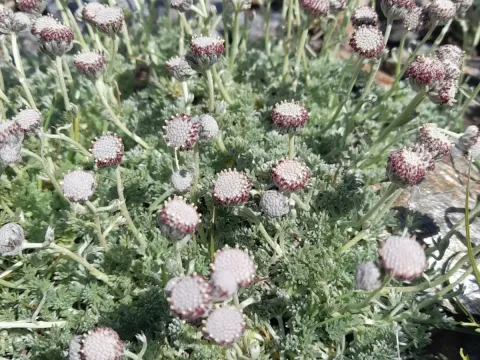
Granada wormwood (Artemisia granatensis) is a rare perennial herbaceous plant belonging to the Asteraceae family. It is an endemic species strictly limited to the high mountain regions of the Sierra Nevada in southern Spain.
What the section contains
Granada wormwood
The plant is highly adapted to extreme alpine environments, thriving at altitudes reaching up to 3400 meters above sea level. It requires well-drained, stony soil and is extremely sensitive to waterlogging or high humidity levels.
Botanically, it is distinguished by its low-growing habit and dense, silvery-white hairs covering the foliage. This physiological trait is essential for reflecting intense UV radiation and preserving moisture during the harsh, dry periods of its growing season.
Success in cultivation requires mimicking its natural high-altitude environment, which includes significant diurnal temperature fluctuations and poor, mineral-rich soils lacking high organic content.
Because of its limited distribution and small population sizes, the species is protected under strict environmental regulations, making commercial agricultural exploitation in the traditional sense practically non-existent.
Historically, the plant has been utilized in the production of traditional herbal liqueurs and in local folk medicine practices common to the Granada region of Andalusia.
Due to its status as a threatened species, wild harvesting is severely restricted by law. Consequently, most professional interest is focused on ex-situ conservation and sustainable propagation in controlled botanical environments.
Harvesting for scientific or pharmacological analysis occurs during the peak flowering stage to ensure the highest yield of essential oils, which are highly prized for their unique chemical composition.
Post-harvest processing involves air-drying the aerial parts in cool, dark environments to prevent the degradation of thermolabile compounds and essential oils present in the glandular hairs.
Ongoing efforts are exploring the feasibility of greenhouse cultivation to produce standardized raw material, thereby reducing the anthropogenic pressure on the wild populations of this fragile high-altitude ecosystem.