
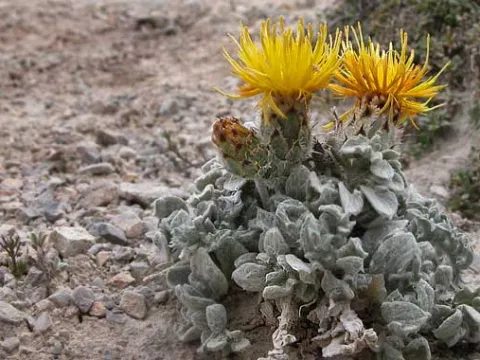
Granada knapweed
Centaurea granatensis
Granada knapweed (Centaurea granatensis) is a distinctive member of the Asteraceae family, native to the mountainous regions of southern Spain. It is primarily valued in modern agriculture as a hardy, drought-tolerant species suitable for low-input landscapes and sustainable meadows.
What the section contains
Granada knapweed
The sowing process begins in early spring when the soil temperature consistently reaches at least 10 degrees Celsius. In Mediterranean-like climates, autumn sowing is also viable, allowing the plant to establish its root system before the dry summer heat arrives.
When preparing the seedbed, choose a location with excellent drainage to prevent root issues. Seeds should be buried at a shallow depth of approximately 1-2 centimeters, ensuring they receive sufficient contact with the soil for successful germination.
Row spacing should ideally be maintained at 30 to 40 centimeters, allowing each plant to reach its full size without excessive competition for light. Under optimal conditions, seedlings emerge within 2 to 3 weeks of planting.
Because the species is highly adaptive, it can be integrated into various crop rotation schemes, especially those focused on promoting pollinator health and restoring local floral diversity in dryland agricultural zones.
This species is a quintessential xerophyte, thriving in dry, sunny environments with minimal water requirements. Excessive irrigation is generally detrimental, as the plant’s roots are prone to rot in waterlogged conditions.
Granada knapweed performs best in sandy, rocky, or gravelly soils with a neutral to slightly alkaline pH. If the soil is heavy clay, amending it with organic matter and sand is essential to improve overall soil porosity and air exchange.
Temperature tolerance is a hallmark of this species, as it is evolved to withstand the extreme fluctuations characteristic of its natural habitat. It remains productive under full sun and can tolerate harsh, drying winds better than most garden varieties.
Fertilization should be handled with restraint; nitrogen-heavy fertilizers often cause excessive stem growth that can weaken the plant’s structure. A single, light application of organic compost early in the season is usually sufficient for optimal development.
Open field cultivation requires consistent sun exposure throughout the day. Even slight shading can cause the plants to become leggy and significantly reduce the intensity of their blooming cycle.
The main threats to Granada knapweed arise from poor soil drainage, which encourages fungal pathogens like root rot. Monitoring soil moisture and ensuring proper air movement between plants are the most effective preventative measures.
Powdery mildew is another common concern, especially in areas with high humidity or poor ventilation. If infection occurs, removing the affected foliage and improving airflow usually stops the spread without needing chemical interventions.
Pests such as aphids and spider mites can occasionally affect the plant, particularly during prolonged dry spells. In such cases, the use of neem oil or insecticidal soap is recommended as a safe and effective control method.
While the plant is quite resilient, young seedlings should be protected from slugs and snails in the early stages of growth. Proper weed control during the establishment phase prevents the encroachment of more aggressive plant species.
Biological resilience is a key benefit of this crop, allowing farmers to maintain high standards of production with minimal environmental impact, which aligns with modern integrated pest management (IPM) standards.
Harvesting for seed production is best performed once the flower heads have fully dried and turned a light brown color. Timing is crucial, as the seeds can disperse naturally if harvesting is delayed too long.
After gathering the flower heads, it is important to dry them completely in a shaded, well-ventilated area to prevent mold formation. The seeds can then be threshed by hand and winnowed to remove any remaining plant debris.
When harvested as cut flowers, the buds should be collected at the stage of early opening. With clean water and occasional stem trimming, these blooms can last for over a week, maintaining their color and structural integrity.
Quality control during harvest involves screening for mature, plump seeds that show no signs of physical damage or disease. Only the healthiest seeds should be retained for future plantings to ensure strong crop vigor.
Storage requires cool, dry conditions with low humidity levels. When kept in sealed, moisture-proof containers, the seeds of Granada knapweed can maintain their viability for up to four years, making it an excellent crop for sustainable seed banking.