
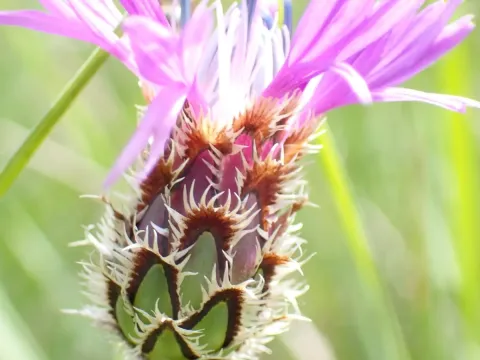
Grass-leaf cornflower
Cyanus graminifolius
The grass-leaf cornflower (Cyanus graminifolius) is a member of the Asteraceae family. It is a perennial herbaceous plant known for its distinctive foliage and resilient nature in various environments.
What the section contains
Grass-leaf cornflower
Sowing should be performed in autumn or early spring. Autumn sowing is often preferred because it allows seeds to undergo natural stratification during the winter months, improving germination rates.
If sowing in the spring, ensure seeds are cold-stratified for at least a month before planting. This process mimics natural seasonal changes and breaks seed dormancy for more uniform emergence.
Seeds should be covered with a light layer of fine soil or vermiculite, no deeper than 1.5 cm. Light is essential for the germination of many Asteraceae species, so do not bury the seeds too deep.
Once seedlings have developed a few sets of true leaves, transplanting or thinning is necessary to ensure each plant has enough space. Proper spacing prevents competition and allows the plant to form a healthy crown.
This species thrives in full sun exposure. It is crucial to select a site that receives at least six to eight hours of direct sunlight daily to promote optimal flowering and structural integrity.
The soil must be well-drained and relatively lean. While Cyanus graminifolius adapts to various soil types, it performs best in sandy or gravelly loam with a near-neutral pH balance.
Water requirements are relatively low once the plant is established. It shows significant drought tolerance, making it an excellent choice for xeriscaping or areas where intensive irrigation is not feasible.
Avoid excessive fertilization, as high levels of nitrogen can lead to soft, floppy growth that is prone to lodging. A balanced, slow-release fertilizer applied once in early spring is generally sufficient.
Air circulation is vital for the health of the plant. Crowded plantings can trap moisture, creating a microclimate that invites disease, so thinning plants to provide adequate space is a key agrotechnical step.
Powdery mildew is the most common fungal issue, especially in seasons with high humidity or poor airflow. Maintaining dry foliage and proper spacing are the best cultural controls.
Aphids can colonize the developing flower buds during the spring season. If an infestation is detected, simple interventions such as a strong blast of water or organic insecticidal soap can be effective.
Root rot is almost always a result of overwatering or poor drainage. It is essential to ensure that the site does not collect standing water, particularly during the dormant period of the plant.
The plant can occasionally be targeted by spider mites, particularly in hot, dry conditions. Monitoring the underside of leaves for signs of webbing or discoloration allows for early intervention.
- Monitor for pests weekly.
- Ensure excellent drainage.
- Remove plant debris in the fall.
- Use mulch sparingly to avoid trapped moisture.