
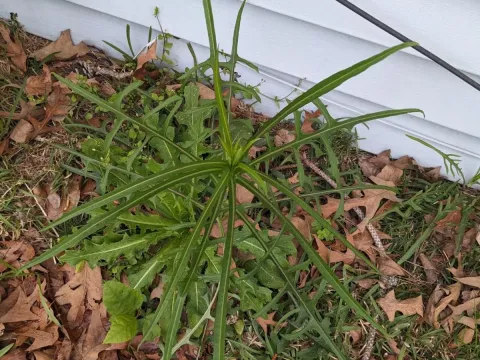
Grass-leaf lettuce
Lactuca graminifolia
Grass-leaf lettuce (Lactuca graminifolia) is a perennial herbaceous plant belonging to the Asteraceae family. Unlike common lettuce varieties, this species possesses distinct, narrow, grass-like leaves, providing it with a unique aesthetic and physiological profile.
What the section contains
Grass-leaf lettuce
Native to North America, this species thrives in open environments such as prairies, meadows, and sparse woodlands. Its adaptation to diverse habitats makes it a resilient plant capable of surviving in various climatic conditions within its native range.
The plant performs best in well-drained, sandy-loam soils with moderate fertility. Adequate sunlight is crucial for the development of its foliage; therefore, planting in open, unshaded areas is recommended for maximum productivity and healthy growth cycles.
Climatically, Lactuca graminifolia is suited to temperate regions. It exhibits decent cold tolerance, making it adaptable to environments where temperatures remain above the deep freeze threshold, allowing it to survive as a multi-year plant.
Its agricultural utilization is specialized, often focusing on its role as a botanical interest or as a potential source of germplasm for breeding programs aimed at improving resistance traits in commercial lettuce varieties.
The crop is susceptible to downy mildew, a common fungal disease in lettuce species, especially when humidity levels are elevated and airflow within the canopy is insufficient.
Pest pressure is primarily driven by aphids, which can quickly colonize the narrow leaves and stunt plant development. Managing aphid populations is essential to maintain plant health and prevent the transmission of viruses.
Slugs and snails are significant pests, particularly for young plants, as they find the foliage highly attractive. Effective pest control measures are required during the early stages of plant development.
Root-related issues, including decay and fungal rot, may occur if the soil remains waterlogged for extended periods, necessitating careful irrigation management and soil aeration.
Successful cultivation requires consistent field monitoring to detect early signs of infestation or infection, coupled with cultural practices that discourage the development of common fungal pathogens.