
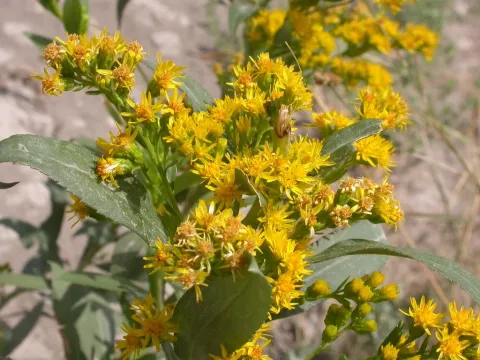
Goldenrod
Solidago L.
Goldenrod (Solidago L.) belongs to the Asteraceae family. As a perennial plant, it is typically propagated through seeds sown in the autumn or spring, or via root division.
What the section contains


Goldenrod
Direct seeding in the field should be done in early spring or before the ground freezes in late autumn. Seeds require minimal soil cover and good contact with moist earth to germinate successfully.
For greenhouse or nursery production, seeds are started indoors in late winter. Seedlings are transplanted once the danger of frost has passed, usually spacing them 50–60 cm apart.
Establishment is rapid, and the plant spreads through an extensive root system. Growers must monitor the patch to ensure the crop does not become invasive in surrounding areas.
Once established, the planting density should be maintained to allow for adequate airflow, which is critical for reducing the risk of fungal infections within the crop stand.
Goldenrod is highly adaptable and thrives in various climates. It is well-suited to full sun exposure, although some species can tolerate partial shade throughout the growing season.
The crop prefers well-drained, fertile, loamy soils. It is remarkably resilient and can grow in poorer soil conditions, though productivity increases significantly with proper nutrient management.
The plant is known for its drought tolerance. Once the root system is deep and established, it requires minimal irrigation, making it a low-maintenance agricultural crop.
Fertilization with balanced NPK fertilizers in the spring helps support vegetative growth. However, excessive nitrogen should be avoided to prevent stems from lodging.
Maintenance involves weeding during the first season of growth. As a hardy perennial, it quickly becomes competitive enough to suppress most annual weeds in subsequent years.
Goldenrod is most famous in agriculture as a vital late-season honey plant. It provides a significant amount of nectar and pollen for pollinators when other sources are scarce.
Harvesting for medicinal purposes occurs during full bloom. The upper portions of the stems are cut, bundled, and dried in well-ventilated, shaded environments to preserve active compounds.
Biomass yield for medicinal use can be quite high, depending on the specific cultivar and the age of the stand. Regular harvesting can help rejuvenate the plants.
The plant is also utilized in the floriculture industry for its decorative yellow inflorescences. High-quality stems are often sold as cut flowers for floral arrangements.
Beyond traditional uses, research continues into the potential of goldenrod as a source of natural dyes and specialized organic compounds for the pharmaceutical industry.
Powdery mildew is the most common fungal disease affecting goldenrod, especially in humid or poorly ventilated areas. Fungicide applications may be necessary during wet seasons.
Aphids can cause damage by feeding on the tender flower buds. Biological control methods, such as introducing beneficial insects, are preferred over broad-spectrum pesticides.
Rust diseases might appear on foliage, presenting as orange or brown pustules. Sanitation, including the removal of dead plant material at the end of the season, is essential for prevention.
Root rot can occur if soil drainage is poor. Ensuring that the planting site has good structure and aeration is the best way to prevent subterranean pathogen outbreaks.
Integrated pest management strategies should be employed to balance the need for crop protection with the protection of the honeybees and other pollinators attracted to the plant.