
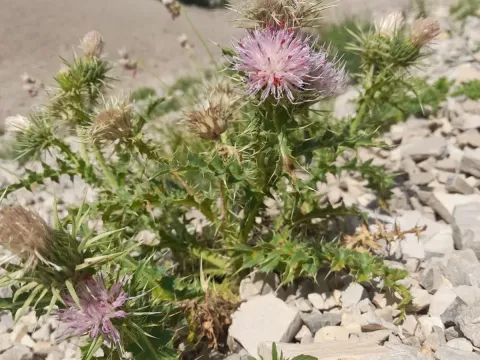
Golden thistle
Carduus aurosicus
The Golden thistle (Carduus aurosicus) is a member of the Asteraceae family. It is a biennial herbaceous plant that exhibits a deep taproot, enabling the crop to survive and thrive in arid or rocky soil conditions typical of its native mountainous habitats.
What the section contains
Golden thistle
Cultivation requires well-drained, sunny locations. The plant performs optimally in neutral or slightly alkaline soils. It is critical to avoid waterlogged conditions, which are the primary cause of root failure during the winter dormancy period.
Regarding climate, this species is highly resistant to cold, making it suitable for temperate zones. However, it requires a dry environment during the flowering phase to ensure proper development of the flower heads and high quality of raw materials.
Botanical traits include strong stems and spiny leaves, which serve as a natural defense mechanism. The golden hue of the bracts is a distinguishing feature that provides both ornamental value and botanical uniqueness to the species.
The crop is highly valued in the pharmaceutical industry due to its chemical composition, specifically the presence of active plant compounds. Furthermore, it serves as an excellent nectar source, significantly contributing to local honey production.
The primary pests affecting Golden thistle include weevils that infest flower buds and aphids that suck sap from young leaves. Regular inspection of the field is necessary to determine the intervention threshold for pest control.
Fungal diseases, particularly powdery mildew, represent a major threat when air circulation is poor or humidity is excessive. Proper spacing between plants is an effective preventive measure to maintain health and yield.
Root rots are common in poorly drained fields and can cause mass mortality of the crop during the spring season. Choosing the right soil structure is essential for long-term production success and preventing soil-borne pathogens.
Integrated Pest Management (IPM) strategies, including manual weeding and mechanical cultivation, are highly recommended to ensure the robustness of the plantation without relying solely on chemical inputs.
Careful timing of any necessary pesticide applications is vital to avoid harming pollinators, as the plant's value as a honey source is a primary economic benefit of cultivating this thistle species.