
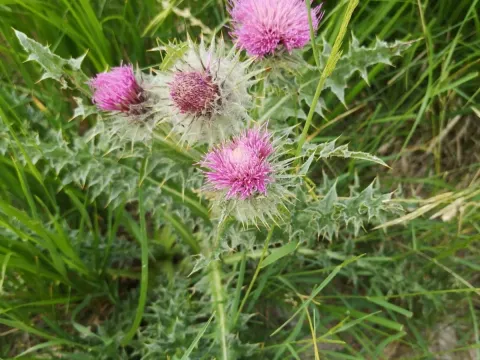
Golden-spined thistle
Carduus chrysacanthus
The golden-spined thistle (Carduus chrysacanthus) is a herbaceous plant within the Asteraceae family. It is recognized by its robust growth habit and distinctive golden-yellow spines that protect the flower heads, providing an evolutionary advantage against herbivores in its native mountainous habitats.
What the section contains
Golden-spined thistle
Native to Southern Europe, particularly the Apennine Mountains, this species thrives in alpine environments. It is well-adapted to rocky, calcareous soils, demonstrating a high tolerance for nutrient-poor substrates that would prove unsuitable for most standard agricultural crops.
Climate requirements for this plant are centered on high solar exposure and excellent drainage. As a xerophytic plant, it displays remarkable resistance to drought conditions, making it a potentially resilient crop for regions affected by increasing global temperatures and limited rainfall.
Regarding soil management, Carduus chrysacanthus requires loose, aerated ground. It is essential to avoid sites with poor drainage, as the plant's root system is susceptible to decay when exposed to waterlogged conditions, regardless of the soil's chemical composition.
Agricultural and economic utility includes its role as a high-quality nectar source for bees during the peak of the dry season. Additionally, the plant is studied for its chemical profile, which includes substances with potential pharmaceutical applications, and its ability to act as a pioneer species in land reclamation.
The main pathological threats include fungal infections like rust (Puccinia spp.) and powdery mildew. These diseases typically flourish in environments with poor air circulation or excessive moisture, necessitating careful spacing and site selection to maintain plant health.
Pest populations commonly include various aphid species and seed-feeding weevils. These insects can significantly impact the reproductive phase of the plant. Integrated Pest Management (IPM) strategies, focusing on biological controls, are recommended to preserve the plant's ecological value as a honeybee forage.