
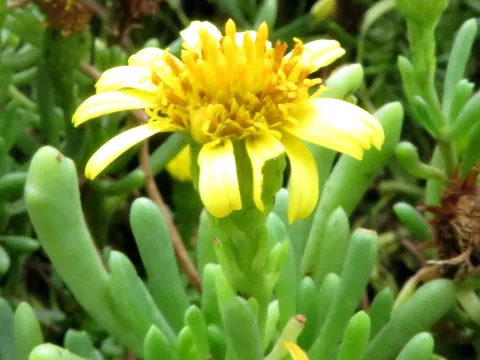
Golden samphire
Inula crithmoides
Golden samphire, scientifically known as Inula crithmoides, is a hardy perennial belonging to the Asteraceae family. It is a well-known halophyte, naturally adapted to thriving in saline coastal environments where few other crops can survive.
What the section contains
Golden samphire
Propagation is primarily achieved through seeds. The sowing process in open fields is ideally scheduled for early spring, once the danger of frost has passed and the soil has achieved a sufficient temperature for consistent germination.
For more reliable results, many growers use a nursery method. Seeds are started in trays indoors in late winter. This provides the controlled environment necessary for the young seedlings to develop strong root systems before they are transplanted into the saline soils of the field.
Seed depth should be kept shallow, approximately 0.5 to 1 cm, as the seeds require sufficient light to trigger optimal growth. Once the seedlings develop several sets of true leaves, they are hardened off before final placement.
Consistent moisture is vital during the initial establishment phase, even for this salt-tolerant plant. Once the plants are established, they demonstrate remarkable resilience to environmental stress and fluctuating climate conditions.
The core requirement for cultivating Inula crithmoides is a soil environment that mimics its natural habitat. It thrives in saline or alkaline soils, making it an excellent candidate for land reclamation and the utilization of marginal agricultural zones.
Full sun exposure is mandatory for healthy development. The plant’s high content of essential oils and its distinct flavor profile are heavily influenced by the intensity of solar radiation it receives during the growing season.
While the plant is highly salt-tolerant, it requires well-drained soil. Waterlogged conditions can be detrimental, leading to root suffocation and increased susceptibility to opportunistic pathogens. A sandy or stony soil structure is generally considered ideal.
The plant is highly resistant to coastal winds and spray, which makes it an excellent choice for stabilizing coastal dunes or landscapes exposed to harsh oceanic climates where common crops would fail.
- High levels of mineral salts in the soil profile.
- Excellent drainage to prevent root rot.
- High intensity of solar exposure.
The yield of golden samphire is measured by the biomass of fresh, fleshy leaves harvested during the active growing season. With proper management, the crop can provide multiple harvests within a single year.
Optimal yields are achieved by timing the harvest correctly. The biomass should be collected before the onset of flowering, which ensures that the leaves maintain their culinary and nutritional properties at the highest possible level.
Regular pruning not only facilitates a controlled harvest but also stimulates the plant to produce new, succulent side shoots. This practice significantly increases the total weight of the harvest over the lifecycle of the plant.
As a perennial crop, golden samphire can remain productive for several years. Soil salinity levels must be monitored to ensure they remain within the range that optimizes the plant's metabolic processes and secondary metabolite production.
For industrial farming, plant spacing is key. Maintaining a distance of 40 to 50 cm between plants allows for better air circulation and easier mechanical intervention, leading to higher overall farm output and efficiency.
Because of its natural habitat, Inula crithmoides is inherently robust and possesses effective chemical defenses against many common pests. However, poor field management can create conditions that favor disease development.
Root rot is the most significant threat to the crop, usually caused by poor soil drainage and stagnant water. Preventing over-saturation of the soil is the most effective way to avoid this pathological issue.
Occasional infestations of aphids or spider mites can occur, particularly if the plants are stressed by drought or heat. Integrated pest management, focusing on biological controls, is usually sufficient to manage these populations without the need for synthetic pesticides.
Powdery mildew may affect the foliage if plants are grown in confined or poorly ventilated conditions. Ensuring adequate spacing and airflow is a simple but effective preventative measure against fungal outbreaks.
Overall, the plant is remarkably resistant to most agricultural threats, making it an attractive low-input crop for farmers aiming to reduce their reliance on chemicals and transition toward more sustainable agriculture.
Harvesting golden samphire involves carefully cutting the succulent shoots from the plant. Manual harvesting is standard, as it allows for the selection of the highest quality material and prevents damage to the crown of the plant.
The harvest should be conducted during the early morning hours, as this is when the plant's moisture content and nutrient density are at their daily peak, ensuring the best culinary experience for the consumer.
Post-harvest handling is critical for maintaining freshness. The biomass should be kept cool and well-ventilated during transport to prevent wilting. Quick cooling or refrigeration can significantly extend the shelf life of the harvested material.
Quality control during the sorting process is essential. Leaves should be uniform, healthy, and free from any signs of drying or discoloration. Proper packaging, often in perforated materials, helps regulate humidity during transit.
At the end of the harvest cycle, the plants should be trimmed of dead debris to maintain the hygiene of the field and prepare the crop for dormancy or the next growth cycle, ensuring its longevity for the following year.