
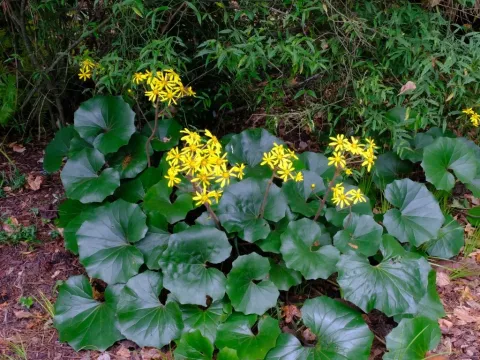
Farfugium hybrids
Farfugium hybrids
Farfugium hybrids are decorative perennials belonging to the Asteraceae family. These plants are prized for their dramatic, large, often variegated leaves that add texture and volume to shade gardens and indoor arrangements.
What the section contains
Farfugium hybrids
Native to moist, coastal environments in East Asia, including Japan, these plants thrive in environments that mimic their natural habitat: cool, humid, and well-sheltered from strong winds and excessive exposure.
For successful cultivation, Farfugium requires consistently moist, well-draining, and nutrient-rich soil. It is highly intolerant of drought, and moisture stress can lead to rapid wilting of the large, fleshy leaf blades.
Regarding light, these plants are classic shade lovers. They perform best in filtered light or full shade, as direct sunlight often causes leaf scorch, significantly reducing the plant's aesthetic value.
Temperature management is critical, as most hybrids are not fully frost-hardy. They are best suited for temperate climates or as container plants that can be moved to protected areas during cold weather.
Slugs and snails are the most significant pests for Farfugium, as they frequently damage the leaves by consuming large portions of the tissue. Management strategies often involve baiting and creating physical barriers.
Fungal diseases, specifically powdery mildew and Botrytis, can manifest during periods of high humidity and poor ventilation. Maintaining proper spacing between plants helps to reduce moisture buildup and infection rates.
Root rot is a common issue resulting from over-irrigation or soil that lacks proper drainage. Ensuring the substrate remains moist but not waterlogged is essential for maintaining a healthy root system.
Aphids may occasionally target new growth or the undersides of leaves. Early intervention with insecticidal soaps or horticultural oils can help manage these infestations before they spread significantly.
In container cultivation, spider mites can become an issue if the ambient air remains too dry. Increasing humidity around the plant and routine misting are effective preventative measures for maintaining plant health.