
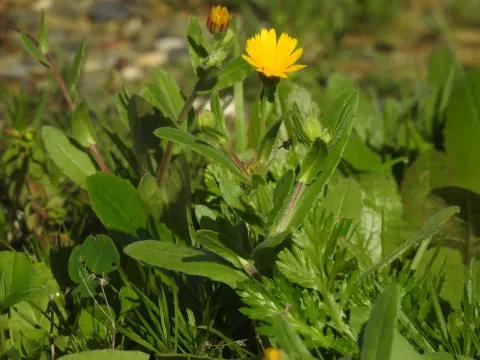
Field marigold
Calendula arvensis
Field marigold is an annual herbaceous plant belonging to the Asteraceae family. Known scientifically as Calendula arvensis, this species is closely related to the common pot marigold, though it is typically smaller and more adapted to wild or semi-wild environmental conditions.
What the section contains
Field marigold
The sowing process is best conducted in early spring once the soil temperature consistently reaches 7 to 10 degrees Celsius. Seeds are small and require a shallow planting depth of approximately 2 centimeters to ensure successful germination.
Agricultural planting typically involves drilling seeds in rows spaced about 40 centimeters apart. This spacing is crucial as it allows for efficient inter-row cultivation and weeding, which helps the young plants establish themselves without competition from aggressive weed species.
Under favorable conditions, seedlings emerge within 10 to 14 days. It is vital to maintain adequate moisture levels during this period, as dry topsoil can significantly reduce the overall stand density of the field.
For commercial production, a seeding rate of approximately 10 kilograms per hectare is recommended to achieve an optimal plant population density that balances yield potential with the available resources of the soil.
This crop is generally hardy and thrives in various soil types, though it prefers well-drained, fertile, sandy-loam soils. Neutral to slightly alkaline pH levels are ideal for promoting vigorous growth and high-quality floral production.
Field marigold is a highly light-demanding crop. It should be grown in open fields that receive full sun for the majority of the day, as insufficient light will result in leggy plants and significantly fewer flower heads.
Water requirements are moderate, but consistent moisture is beneficial during the active budding and flowering stages. While the plant possesses some degree of drought tolerance, irrigation during dry spells is recommended to sustain production.
The plant is resilient to minor temperature fluctuations, but prolonged exposure to waterlogged soil conditions in cooler seasons should be avoided, as it can lead to root rot and other physiological stressors.
Nutrient management focuses on early nitrogen applications to support initial leaf development, followed by phosphorus and potassium amendments to enhance flower formation and improve the chemical content of the harvested material.
Like many members of the Asteraceae family, field marigold is susceptible to powdery mildew. This fungal disease appears as a white, dusty layer on the foliage and is most prevalent during periods of high humidity and poor air circulation.
Root rots caused by various soil-borne pathogens can be a significant threat if the soil remains excessively wet. Proper drainage and adhering to a sound crop rotation schedule are the primary methods for preventing these soil-borne issues.
Pests such as aphids and spider mites are frequent invaders. They feed on plant sap, causing stunted growth and leaf curling, which reduces the plant's overall vitality and the quality of the commercial harvest.
Monitoring for insect outbreaks is essential. In cases of severe infestation, integrated pest management practices, including the use of beneficial insects or selective biological agents, are preferred over broad-spectrum chemicals.
Maintaining clean field borders is an effective cultural practice to reduce the pressure from common weeds and migratory pests that might serve as vectors for viral or fungal infections.
Harvesting field marigold is a continuous process that spans several weeks or even months during the growing season. Only the fully opened flower heads should be picked, as these contain the highest concentration of bioactive compounds.
Manual picking is common for smaller scale operations, while larger commercial fields may utilize mechanized harvesters that carefully comb the flowering tops of the plants to minimize damage to the foliage.
Once harvested, the flowers must be moved to the drying facility immediately. Prolonged storage in bins can lead to heat buildup and deterioration of the essential oils, which negatively impacts the market value of the crop.
Drying is performed in controlled environments at temperatures between 40 and 45 degrees Celsius. Ensuring that the product is dried to a moisture content of approximately 12 percent is critical for shelf-life stability.
Final processing involves cleaning the dried flowers of any debris or foreign matter before packaging them in moisture-proof containers for storage or sale to pharmaceutical or cosmetic processors.