
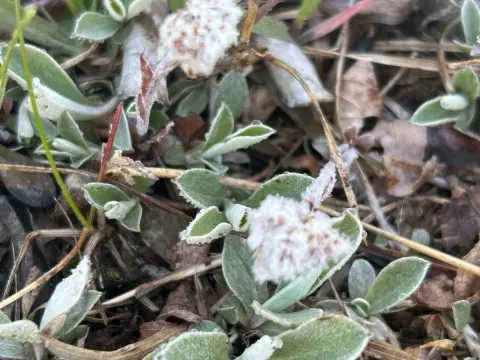
Field pussytoes
Antennaria neglecta
Field pussytoes is a hardy perennial belonging to the Asteraceae family. Seeds are typically sown in late autumn or early spring, often requiring a cold stratification period to break dormancy.
What the section contains
Field pussytoes
Since the seeds are extremely tiny, they should be surface-sown and barely covered with soil. Proper light exposure is essential for germination, which usually occurs at temperatures between 15 and 20 degrees Celsius.
Vegetative propagation via clump division is a preferred and reliable method. This is best accomplished during the dormant season or early spring before the plant enters its peak blooming phase.
When establishing a new planting, maintain appropriate spacing to ensure adequate air circulation. Proper spacing prevents overcrowding and reduces the risk of humidity-related issues in the center of the mat.
Moisture control is vital during the initial establishment period. Once the root system is well-developed, the plant becomes highly drought-tolerant and requires minimal intervention.
This species thrives in full sun exposure. It is highly adaptable to poor, sandy, or rocky soils, making it an excellent choice for sites where more demanding vegetation would fail to thrive.
Field pussytoes is remarkably cold-hardy, capable of surviving harsh northern winters without the need for additional protective mulching or coverage.
Excellent soil drainage is the most important cultural requirement. Standing water or persistently wet conditions can quickly lead to root decay and the decline of the plant colony.
The plant demonstrates significant tolerance to periodic drought. Its ability to extract nutrients from depleted soils allows it to remain green and vigorous even during the dry summer months.
Fertilization is rarely necessary and generally discouraged, as nutrient-rich soils can cause the plant to lose its compact growth habit and competitive edge against weeds.
Field pussytoes is characterized by high resistance to common agricultural diseases. Fungal issues, such as powdery mildew, may only occur in environments with poor airflow and excessive humidity.
Pest damage is minimal due to the presence of secondary metabolites in the foliage. It is generally avoided by browsing mammals and many common garden insect pests.
Root rot is the primary physiological threat, usually caused by planting in heavy, poorly drained clay soils. Careful site selection is the best preventative measure against this problem.
Slugs and snails may occasionally feed on young, succulent growth during early spring. Utilizing a layer of gravel as a top dressing can effectively discourage these mollusks.
Because of its robust nature, chemical intervention is rarely required. The plant is perfectly suited for integrated pest management and sustainable, low-maintenance landscaping projects.