
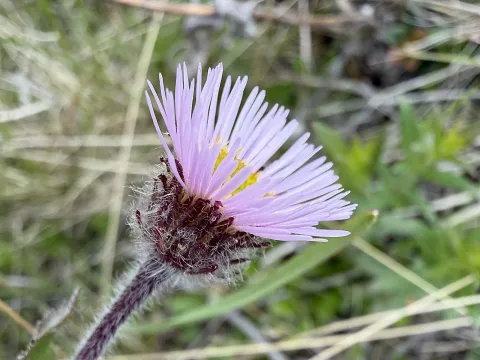
Northern fleabane
Erigeron borealis
Northern fleabane (Erigeron borealis) is a hardy perennial belonging to the Asteraceae family. It is native to the arctic and subarctic regions, primarily found in Scandinavia, Scotland, and Greenland, making it highly adapted to harsh, cold climates.
What the section contains
Northern fleabane
The species thrives in well-drained, stony, or sandy soils. It is critical to ensure that the site has excellent drainage, as the plant is susceptible to root rot if water stagnates around its base for extended periods during the growing season.
Regarding climate, Northern fleabane prefers bright, open locations. While it is naturally cold-hardy, it requires protection from extreme summer heat in southern regions, which can often be achieved by using gravel mulching to keep the root zone cool.
Agricultural practices for this crop focus on creating an environment that mimics its natural subarctic habitat. This includes minimal soil enrichment, as the plant is adapted to nutrient-poor soils and can become leggy or weak if over-fertilized with nitrogen.
Maintenance involves routine weeding, particularly when plants are young. Since Northern fleabane has a slow growth habit, competition from fast-growing weeds must be strictly controlled to allow the crop to establish a robust root system.
The primary threats to Northern fleabane include fungal diseases such as root rot. These issues are almost always caused by poor soil drainage or excessive humidity around the root system, which prevents oxygen from reaching the roots.
Pests such as aphids can colonize the plant during warm, dry spells. These insects feed on the sap and can lead to stunted growth or the transmission of viral diseases if not managed through proper monitoring and biological control methods.
Powdery mildew is another common concern, especially when plants are spaced too closely. To prevent this, growers should ensure adequate airflow and avoid overhead watering that keeps the foliage consistently wet for long durations.
Spider mites are occasionally problematic in warmer environments. They tend to thrive in dry conditions and can cause the leaves to lose their natural color and vigor if left untreated during the peak of summer.
Proactive disease management involves thinning out overcrowded plants and ensuring that all agricultural tools are sterilized to prevent the accidental spread of pathogens between plots or individual specimens.