
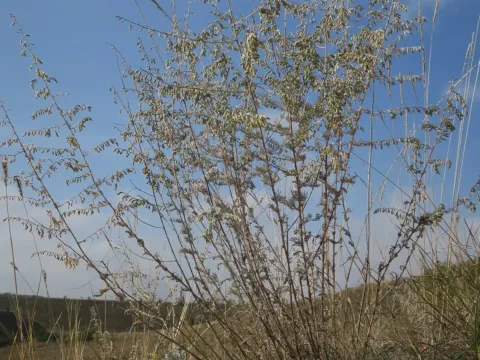
Nodding sagebrush
Artemisia nutans
Nodding sagebrush (Artemisia nutans) is a perennial herbaceous plant belonging to the Asteraceae family. It is a highly specialized calciphile, naturally adapted to thriving on chalky outcrops and rocky, carbonate-rich soils where few other species can establish themselves.
What the section contains
Nodding sagebrush
The origin of this species is linked to the steppe zones of Eurasia, particularly the chalk slopes of Eastern Europe. It plays a significant role in the biodiversity of limestone steppe phytocoenoses and is often considered a rare species requiring conservation efforts.
Environmental requirements for this culture are specific: it demands well-lit, open areas with high solar exposure. The species is highly drought-tolerant, possessing leaf pubescence that effectively minimizes transpiration during peak heat periods.
Regarding soil conditions, Artemisia nutans necessitates loose, well-drained substrates. Excessive moisture or heavy clay-based soils are detrimental, as they inhibit root respiration and promote decay. The ideal substrate is alkaline, reflecting its natural habitat of chalk debris.
Economically, the plant is primarily utilized for land reclamation projects on degraded chalk quarries and in specialized medicinal research. Its ability to stabilize soil surfaces makes it a valuable candidate for restoring damaged ecosystems in arid, lime-rich environments.
The primary threats to Artemisia nutans include habitat destruction due to industrial chalk extraction and intensive grazing by livestock. As a niche-specific plant, it struggles to recover once its sensitive carbonate substrate is mechanically disturbed or contaminated.
Pathogenic risks include various fungal infections, particularly powdery mildew, which can develop during uncharacteristically humid growing seasons. Aphids are the most common pests that can impact the vegetative development of the plant during the early growth stages.
Invasive weed encroachment poses a significant threat, as the slow-growing nature of the sagebrush makes it vulnerable to competition for space and sunlight. Weed management should be executed manually to prevent damage to the fragile soil structure.
Rodents can occasionally pose a risk during extreme droughts by damaging roots, but this is usually a localized issue. Effective management requires maintaining the natural integrity of the slopes and avoiding heavy machinery that compacts the chalky soil.
Monitoring the health of the plant involves inspecting foliage for color changes or pests. Given the plant's sensitivity, any pest control efforts should prioritize biological agents over synthetic pesticides to preserve the surrounding ecological balance.